Panaeolus antillarum
Panaeolus antillarum
Type: gilled mushroom
Physical Characteristics
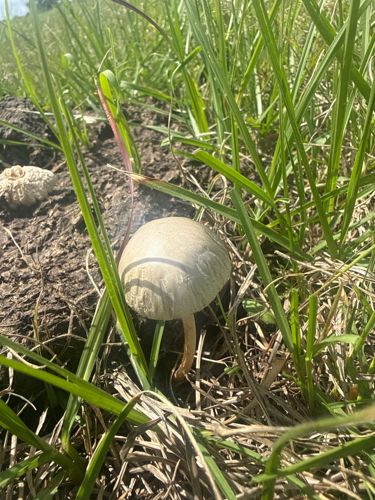
The mushroom features a thick, fleshy, bell-shaped cap that is typically silvery-white to light grey. The surface is smooth but can develop cracks in dry weather. The gills are closely spaced, initially grayish and turning black with age as the spores mature. The stem is solid, white, and can be quite long and sturdy. The spore print is black.
Habitat & Growing Conditions
This species is coprophilous, meaning it grows directly on dung, particularly from horses and cattle. It is commonly found in tropical and subtropical grasslands and pastures.
Season & Fruiting Time
It fruits year-round in tropical climates and during the warm, wet months of summer and autumn in temperate regions.
Similar Looking Species
Panaeolus cyanescens is very similar but can be distinguished by its thinner flesh and blue bruising on the stem. Panaeolus semiovatus is also similar but possesses a distinct ring (annulus) on its stem.
Ecological Role
It serves as a primary decomposer (saprobe), specifically breaking down organic matter in herbivore dung and recycling nutrients back into the soil of grasslands.
Safety reminder
AI mushroom identification is a best-effort estimate and can be wrong. Never use it to decide whether a mushroom is safe to handle or eat — always confirm with a qualified mycologist before any consumption.
Identified on: 4/10/2026
Mode: Standard