Black-staining Polypore
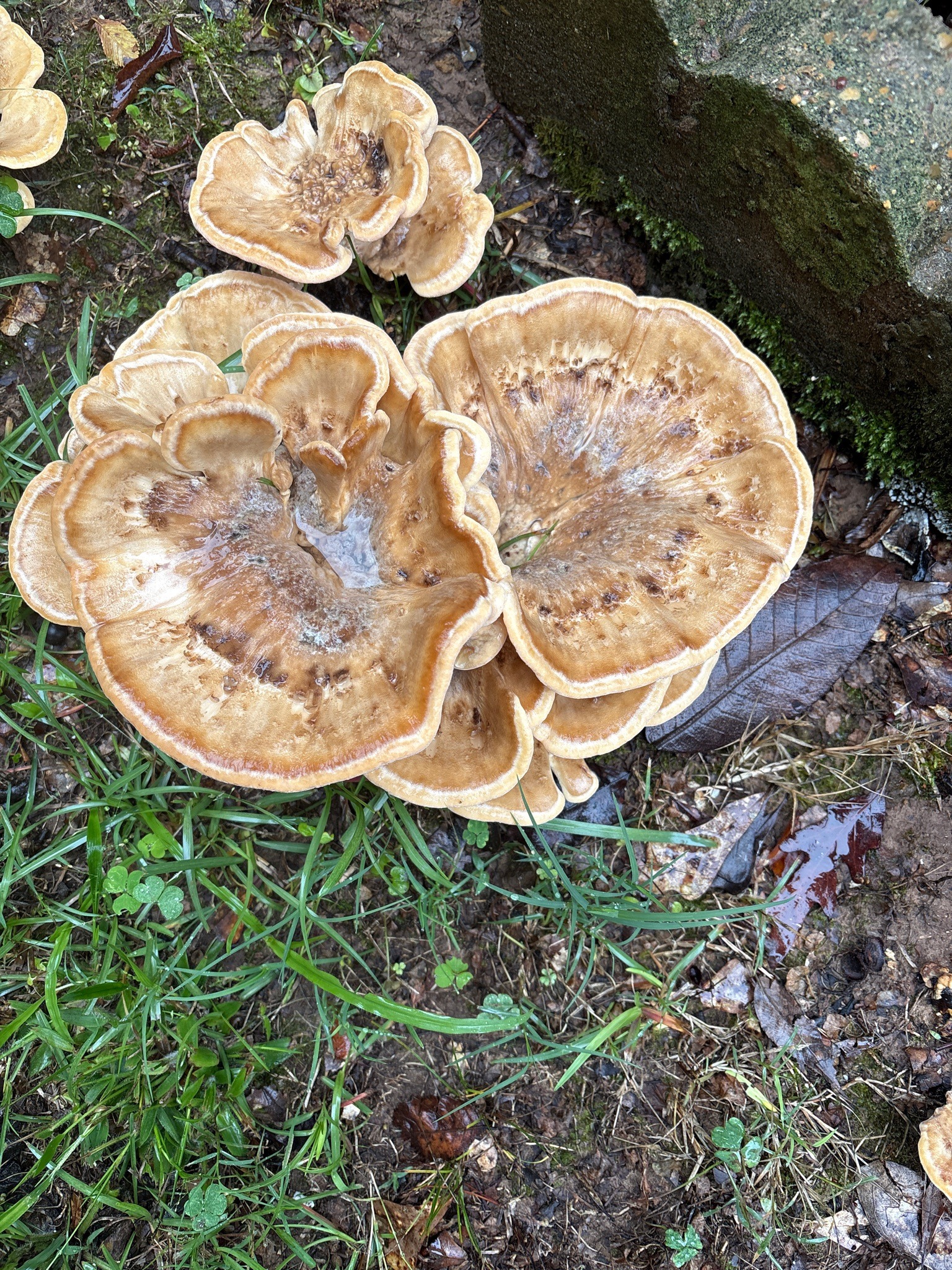
Meripilus sumstinei
Type: polypore
Physical Characteristics
Large, overlapping fan-shaped caps that are ochre to tan in color with brown scales or zones. One of its most distinctive physical features is that the white pore surface and flesh stain dark gray to black when bruised or handled.
Habitat & Growing Conditions
Typically found at the base of living deciduous trees, especially oaks, or growing from buried roots and stumps.
Season & Fruiting Time
Late summer and autumn.
Similar Looking Species
Grifola frondosa (Hen of the Woods) which does not stain black and has smaller caps; Bondarzewia berkeleyi (Berkeley's Polypore) which is larger, thicker, and does not stain black.
Ecological Role
Saprophytic on dead wood and parasitic on the roots of living hardwoods, causing white rot.
Fruiting Body
Consists of large, multi-capped rosettes. Individual caps are fan-shaped, flattened, with wavy margins. The upper surface is dry and finely velvety when young, becoming smoother and zoned with age. The hymenophore consists of white to cream-colored pores on the underside. The stipe is usually a thick, fused common base.
Size
Rosettes can reach 30-100 cm in diameter; individual caps are typically 5-20 cm wide.
Spore Print
White
Distribution
Common in Eastern North America and similar climates.
Identification Tips
The most reliable field test is to bruise the white pore surface or cut the flesh and wait 15-30 minutes for it to turn distinctly black.
Interesting Facts
The genus Meripilus is known for creating some of the largest fruiting bodies among fungi. The species is named 'sumstinei' in honor of the American mycologist David Sumstine. It plays a significant role in nitrogen cycling within forest ecosystems by breaking down complex wood fibers in wood.
Safety reminder
AI mushroom identification is a best-effort estimate and can be wrong. Never use it to decide whether a mushroom is safe to handle or eat — always confirm with a qualified mycologist before any consumption.
Identified on: 5/1/2026
Mode: Standard