Milkcap (general)
Lactarius (genus)
Type: gilled mushroom
Physical Characteristics
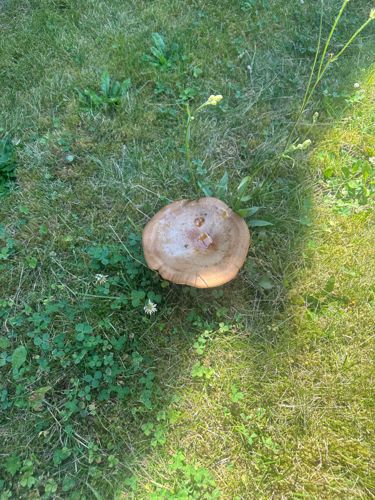
The mushroom in the image appears to be a gilled mushroom with a large, somewhat flattened to depressed cap. The cap color is a light brown or tan, possibly with some darker spots or areas, and the surface seems to be smooth rather than scaly or fuzzy. The size of the cap is relatively large. Without images of the underside, gill structure (attachment, spacing, color) cannot be determined. Similarly, no stem (stipe) characteristics are visible.
Habitat & Growing Conditions
Lactarius species generally grow terrestrially in woodland areas, forming mycorrhizal associations with specific trees. The image shows the mushroom growing in grass, which could indicate it is in a lawn area near trees, or that its fungal network extends into the lawn from nearby tree roots. They prefer well-drained soil.
Season & Fruiting Time
Many Lactarius species typically fruit from summer through fall, especially after periods of rain. The specific fruiting season can vary depending on the particular species and the local climate.
Similar Looking Species
There are many species within the Lactarius genus, and many other gilled mushrooms can look superficially similar, especially without viewing the stem, gills, and checking for latex (milk) production, which is a key distinguishing feature of Lactarius. Without more information or clearer views, it's difficult to narrow down to a specific species. Some common look-alikes from other genera could include certain Russula species (which do not produce latex) or some types of brown-capped gilled mushrooms. Distinguishing features for Lactarius are the presence of 'milk' or latex when the gills are cut or damaged, and often brittle flesh. Russula species also have brittle flesh but lack latex. Specific identification often requires microscopic examination and detailed observation of all macroscopic features and ecological context. Because the image only shows the top of the cap, it's very difficult to rule out many other similar-looking terrestrial gilled mushrooms without more diagnostic features, such as gills, stem, and any latex.
Ecological Role
Lactarius species are typically mycorrhizal, forming symbiotic relationships with the roots of trees and other plants. They help their host plants absorb water and nutrients from the soil, in exchange for sugars produced by the plant through photosynthesis. This mutualistic relationship is vital for the health and growth of both the fungus and its host, playing a significant role in forest ecosystems.
Safety reminder
AI mushroom identification is a best-effort estimate and can be wrong. Never use it to decide whether a mushroom is safe to handle or eat — always confirm with a qualified mycologist before any consumption.
Identified on: 8/11/2025
Mode: Standard