Deer Mushroom
Pluteus cervinus
Type: gilled mushroom
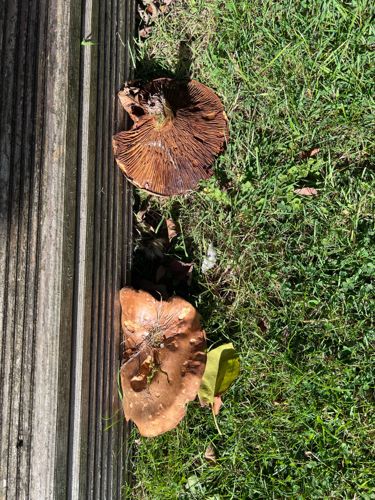
Physical Characteristics
The Deer Mushroom has a cap that varies from dark brown to grayish-brown, often with darker radiating fibers, and can be 5-15 cm in diameter. It starts bell-shaped and flattens with age, sometimes developing a central umbo. The gills are free from the stem, broad, and start white, becoming pinkish with maturity due to pink spore production. The stem is solid, central, 5-15 cm long, and 0.5-2 cm thick, often paler than the cap, sometimes with fine fibrils. The spore print is pink.
Habitat & Growing Conditions
This mushroom typically grows saprophytically on decaying wood, stumps, logs, wood chips, or buried wood. It can be found in a variety of forest types, both coniferous and deciduous, as well as in gardens and parks.
Season & Fruiting Time
It is most commonly found from spring through autumn, during periods of mild temperature and sufficient moisture.
Similar Looking Species
Similar looking species include other members of the Pluteus genus. Some Entoloma species can also have pink gills and a similar appearance, but their gills are typically attached to the stem and their stems lack the fine fibrils of Pluteus cervinus. Care should be taken to distinguish it from fungi that grow on wood and develop dark brown caps and pinkish gills.
Ecological Role
The Deer Mushroom is a saprophytic fungus, playing a crucial role as a decomposer in forest ecosystems. It breaks down dead wood, returning nutrients to the soil and contributing to the health of the environment.
Safety reminder
AI mushroom identification is a best-effort estimate and can be wrong. Never use it to decide whether a mushroom is safe to handle or eat — always confirm with a qualified mycologist before any consumption.
Identified on: 10/28/2025
Mode: Standard