Artist's Conk
Ganoderma applanatum
Type: Polypore
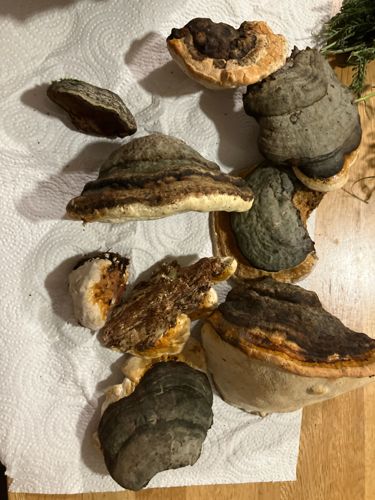
Physical Characteristics
The Artist's Conk is a large, perennial bracket fungus. It has a tough, woody fruiting body that is gray to brownish-gray on the top surface, often with concentric growth rings and a dull, sometimes slightly lumpy texture. The margin is typically lighter in color, often whitish. The underside (pore surface) is pure white when fresh and bruises brown when handled or when objects are drawn on it (hence 'Artist's Conk'). It has very fine pores, 4-6 per millimeter. The interior flesh is brownish and corky to woody. Size varies greatly, from a few inches to over two feet wide.
Habitat & Growing Conditions
This fungus is saprophytic and parasitic, growing on dead or living deciduous trees, particularly hardwoods like oak, maple, and beech. It causes a white rot in the heartwood of the host tree. It can be found growing singly or in overlapping clusters on trunks and stumps.
Season & Fruiting Time
It is a perennial fungus and can be found year-round. New growth occurs primarily during warmer, humid months, but the hard fruiting bodies persist through all seasons.
Similar Looking Species
Similar species include other Ganoderma species, such as Ganoderma adspersum (which often has a thicker, more rounded margin and lacks the smooth, white pore surface that marks easily). Ganoderma brownii is another similar species, but its pore surface is often dingier. Fomes fomentarius (Tinder Conk) has a hooved shape and a harder, smoother surface, usually without the distinct zoning of Artist's Conk, and a slightly different pore surface color.
Ecological Role
Ganoderma applanatum is a saprophyte and a weak parasite. As a saprophyte, it plays a crucial role in breaking down deadwood, especially hardwoods, returning nutrients to the ecosystem. As a parasite, it can infect living trees, causing white rot in the heartwood, which can eventually lead to the tree's decline and death. It creates habitats for various insects and other organisms as it decays wood.
Safety reminder
AI mushroom identification is a best-effort estimate and can be wrong. Never use it to decide whether a mushroom is safe to handle or eat — always confirm with a qualified mycologist before any consumption.
Identified on: 9/20/2025
Mode: Standard