Red-belted Polypore (Aged/Weathered)
Fomitopsis mounceae (formerly Fomitopsis pinicola complex)
Type: polypore
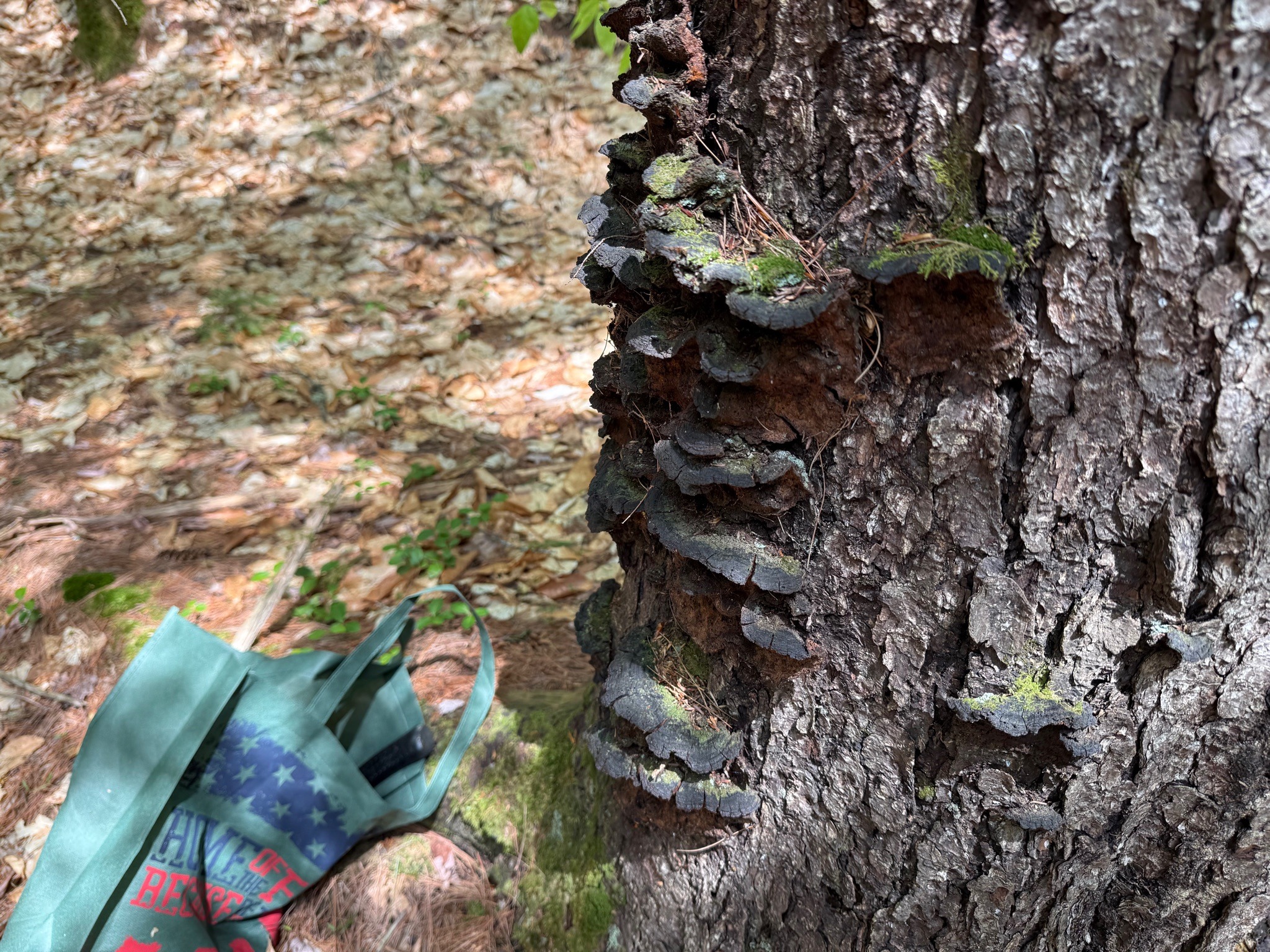
Physical Characteristics
Hard, woody, perennial bracket fungus. These specimens appear old and weathered, showing a dark, blackened upper surface that is cracked (rimose) with some moss growth. They lack the characteristic vibrant red-orange margins seen in fresh specimens.
Habitat & Growing Conditions
Grows on living or dead coniferous trees, occasionally on hardwoods. Found on the trunk of the tree as seen in the image.
Season & Fruiting Time
Perennial (fruiting bodies are present year-round)
Similar Looking Species
Phellinus igniarius (Tinder Conk) which is generally more hoof-shaped and darker throughout, or Ganoderma species which usually have a shinier, laccate surface.
Ecological Role
Saprophytic (decomposer) causing brown crumbly rot, and occasionally parasitic on weakened trees.
Fruiting Body
Conical to shelf-like brackets. The upper surface in these older specimens is charcoal-grey to black and deeply fissured. The hymenophore (underside) consists of minute pores, typically creamy white when fresh but browning with age. No stipe (sessile).
Size
5-40 cm wide, 3-20 cm thick at the base.
Spore Print
White to light yellow.
Distribution
Widespread across North America, Europe, and Asia.
Identification Tips
Look for the thick, woody shelf-like structure on conifers. Even when blackened by age, the internal context usually remains a corky, wood-color and the pore layer stays relatively distinct from the upper crust.
Interesting Facts
These fungi are important for forest ecosystems as they break down cellulose, recycling nutrients back into the soil. They are exceptionally long-lived for a fungus, adding a new layer of pores each year. They have been studied for their ability to produce various volatile organic compounds.
Safety reminder
AI mushroom identification is a best-effort estimate and can be wrong. Never use it to decide whether a mushroom is safe to handle or eat — always confirm with a qualified mycologist before any consumption.
Identified on: 5/18/2026
Mode: Standard