Red-Capped Butter Bolete
Boletus pseudosatanas
Type: Bolete
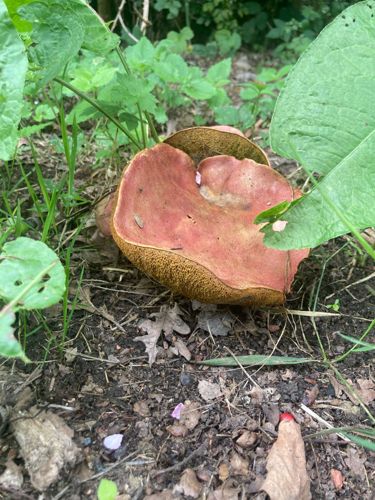
Physical Characteristics
The image shows a large, robust bolete with a dull reddish-brown to brick-red cap, which appears somewhat velvety or finely textured. The underside of the cap is not clearly visible but is likely porous given its classification. The margin of the cap seems to be slightly inrolled. The stem is largely obscured but appears stout and is likely concolorous with the cap or lighter.
Habitat & Growing Conditions
Terrestrial, growing on soil, often in deciduous or mixed woodlands, frequently found near oak trees. Boletes are typically mycorrhizal, meaning they form a symbiotic relationship with the roots of trees.
Season & Fruiting Time
Summer to early autumn, typically from July through October, depending on geographical location and local weather conditions.
Similar Looking Species
Other large, red-capped boletes could be confused, such as Rubroboletus satanas (Satan's Bolete), which generally has a paler cap (whitish to grayish) but can sometimes have reddish tints, and its pores are often yellowish to reddish-orange. Rubroboletus rhodoxanthus also shares some similarities in color but often has a more distinct pinkish-red stem reticulation. Distinguishing features often involve examining the pore color, stem reticulation, and color changes upon bruising.
Ecological Role
Mycorrhizal – forming symbiotic relationships with certain trees, particularly oaks. The fungus provides the tree with increased access to water and nutrients from the soil, while the tree provides the fungus with carbohydrates produced through photosynthesis. This relationship is crucial for the health and growth of the host trees and the forest ecosystem.
Safety reminder
AI mushroom identification is a best-effort estimate and can be wrong. Never use it to decide whether a mushroom is safe to handle or eat — always confirm with a qualified mycologist before any consumption.
Identified on: 7/28/2025
Mode: Standard