Parasol Mushroom
Macrolepiota procera
Type: gilled mushroom
Physical Characteristics
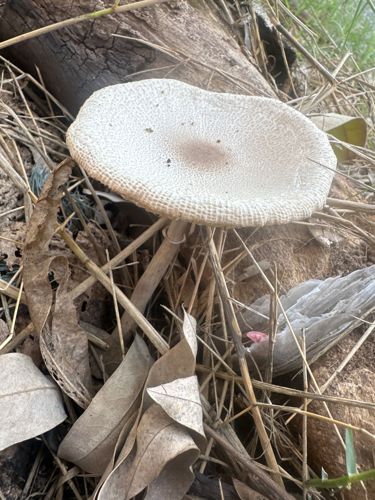
The species in the genus Macrolepiota generally have large caps, typically white to off-white, often with brown scales or a central brown umbo. Gills are free and white, becoming cream or brownish with age. The stipe is usually tall and central, often with a movable ring.
Habitat & Growing Conditions
These fungi typically grow terrestrially in grasslands, meadows, clearings, and woodlands, often in disturbed areas or on well-drained soils. They prefer rich, humus-filled soil.
Season & Fruiting Time
Parasol mushrooms are typically found from late summer through autumn, especially after periods of rain. Their fruiting season can extend into early winter in milder climates.
Similar Looking Species
Similar looking species include other large white gilled mushrooms from the genera Chlorophyllum and Lepiota. Chlorophyllum molybdites (the Green-spored Parasol) is very similar but has a green spore print and often stains reddish-brown when cut or bruised. Lepiota species are generally smaller and some are highly toxic; specific identification is crucial due to potential resemblances.
Ecological Role
Macrolepiota species are saprophytic, meaning they obtain nutrients from decaying organic matter. They play a crucial role in decomposition, breaking down dead plant material in forests and grasslands, thereby recycling nutrients back into the ecosystem.
Safety reminder
AI mushroom identification is a best-effort estimate and can be wrong. Never use it to decide whether a mushroom is safe to handle or eat — always confirm with a qualified mycologist before any consumption.
Identified on: 7/25/2025
Mode: Standard