Slippery Jack
Suillus luteus
Type: Bolete mushroom
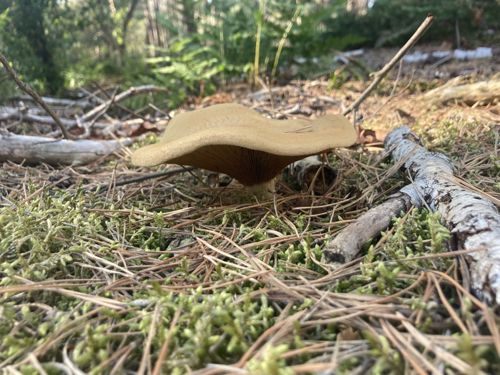
Physical Characteristics
Cap: 5-15 cm wide, convex to broadly convex or nearly flat with age, sticky or slimy when wet, yellow-brown to dark brown. Stipe: 4-10 cm long, 1-2.5 cm thick, whitish to yellowish, often with a purplish-brown ring and dotted with glandular spots below the ring. Pores: Angled, yellowish, becoming olive-yellow with age. Spore print: Olive-brown.
Habitat & Growing Conditions
Mycorrhizal with pine trees, often found in plantations, disturbed areas, and forests with an abundance of pine. Grows on the ground.
Season & Fruiting Time
Late summer to autumn.
Similar Looking Species
Other Suillus species, but S. luteus is distinguished by its prominent purplish-brown ring and gooey cap. Suillus grevillei (Larch Bolete) is similar but grows exclusively with larch trees and has a more orange-yellow cap.
Ecological Role
Mycorrhizal, forming a symbiotic relationship with pine trees where the fungus aids the tree in nutrient and water absorption, and the tree provides sugars to the fungus. Important for the health and growth of pine forests.
Safety reminder
AI mushroom identification is a best-effort estimate and can be wrong. Never use it to decide whether a mushroom is safe to handle or eat — always confirm with a qualified mycologist before any consumption.
Identified on: 9/30/2025
Mode: Standard