Woolly Milkcap
Lactarius torminosus
Type: gilled mushroom
Physical Characteristics
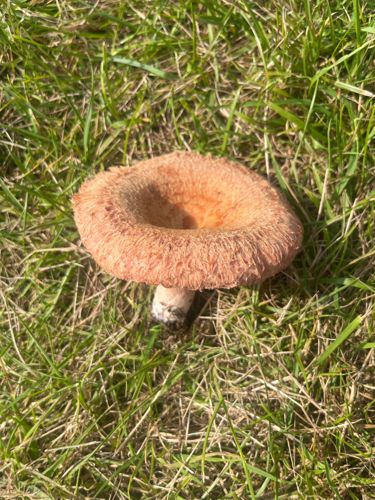
The species typically has a cap that is broadly convex to depressed in the center, often with an inrolled margin when young. The color ranges from reddish-orange to dull orange-brown, and the surface is distinctly shaggy or hairy, especially towards the margin. The gills are pale yellowish to creamy, crowded, and run down the stem (decurrent). The stem is relatively short, stout, and paler than the cap, sometimes darkening with age or handling. When cut or bruised, it often exudes a white, milky latex. Spore print color is typically creamy to pale yellow.
Habitat & Growing Conditions
This mushroom is typically found growing on the ground, often in association with birch trees, in broadleaf or mixed woodlands, parks, and sometimes in grassy areas near these trees. It prefers acidic soils.
Season & Fruiting Time
It is typically found from late summer through autumn, often after periods of rain.
Similar Looking Species
Lactarius pubescens (Downy Milkcap) is similar but generally smaller, paler, and less shaggy, often associating with willow. Lactarius resimus (Cream-coloured Milkcap) is also milk-white to creamy and has less prominent hairs, and is typically associated with birch and conifers. Lactarius deterrimus (Orange Milkcap) has an orange, carrot-colored latex and associates with spruce.
Ecological Role
This mushroom forms a mycorrhizal association with certain trees, particularly birch. In this symbiotic relationship, the fungus helps the tree absorb water and nutrients from the soil, while the tree provides the fungus with carbohydrates produced through photosynthesis. Its presence indicates a healthy forest ecosystem where these trees are present.
Safety reminder
AI mushroom identification is a best-effort estimate and can be wrong. Never use it to decide whether a mushroom is safe to handle or eat — always confirm with a qualified mycologist before any consumption.
Identified on: 7/21/2025
Mode: Standard