Porcini
Boletus edulis
Type: Bolete
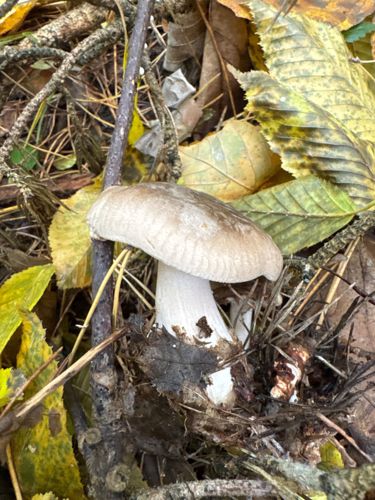
Physical Characteristics
Cap: 7-30 cm, convex to broadly convex or almost flat, smooth to slightly wrinkled, sticky when moist, color varies from reddish-brown, brown, to yellowish-brown. Pores: White becoming yellowish or olive-brown with age, typically depressed around the stem. Stem: 5-25 cm long, 2-7 cm thick, robust, club-shaped or bulbous when young, becoming more cylindrical with age, whitish to brownish, often covered with a fine white network (reticulation) near the top. Flesh: White, firm, unchaning when cut. Spore print: Olive-brown.
Habitat & Growing Conditions
Typically mycorrhizal, forming symbiotic relationships with a variety of trees, including conifers (pine, spruce, fir) and hardwoods (oak, birch, beech, chestnut). Found growing on the ground in woodlands and forests.
Season & Fruiting Time
Late summer to autumn, typically after periods of rain.
Similar Looking Species
Similar looking species include Tylopilus felleus (Bitter Bolete), which has pinkish pores and very bitter taste, and B. aestivalis (Summer Bolete) or B. pinophilus (Pine Bolete), which are closely related species of Porcini. Distinguishing features often involve pore color, stem reticulation, and habitat.
Ecological Role
Mycorrhizal, forming a symbiotic relationship with tree roots, enhancing the tree's ability to absorb water and nutrients while receiving sugars from the tree. This mutualistic relationship is vital for the health of many forest ecosystems.
Safety reminder
AI mushroom identification is a best-effort estimate and can be wrong. Never use it to decide whether a mushroom is safe to handle or eat — always confirm with a qualified mycologist before any consumption.
Identified on: 10/19/2025
Mode: Standard