Yellow Fairy Cups
Bisporella citrina
Type: Cup fungus
Physical Characteristics
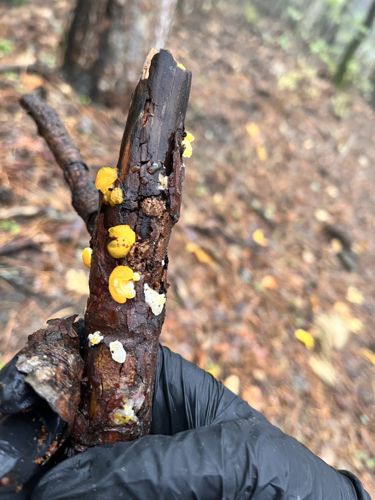
Bisporella citrina typically forms small, goblet-shaped or cup-shaped fruiting bodies, usually 1-3 mm in diameter. The color is bright lemon yellow to golden yellow, and the surface is smooth. They often grow in dense clusters and can sometimes appear somewhat convex or cushion-like when very young or rehydrated. The underside, if visible, is often similar in color or slightly paler.
Habitat & Growing Conditions
This fungus is saprobic, meaning it grows on dead wood, particularly decaying deciduous logs, branches, and woody debris. It prefers moist conditions and can be found on bark or directly on decaying wood. It's often seen on deeply decorticated (bark-less) wood.
Season & Fruiting Time
It can be found throughout the year in suitable humid conditions, but is most common from late summer through late autumn and even into winter during mild periods, especially after rain.
Similar Looking Species
Similar species might include other small yellow cup fungi, but Bisporella citrina is distinguished by its vibrant yellow color, small size, typically smooth surface, and preference for decaying hardwoods. Some species of Dasyscyphus or Lachnellula are usually hairy. Other small discomycetes like species of Hymenoscyphus might look similar but often have a short stipe and differ microscopically.
Ecological Role
Bisporella citrina is a saprobic fungus, playing a crucial role in the decomposition of dead woody material. It helps to break down cellulose and lignin in fallen branches and logs, returning nutrients to the ecosystem and contributing to soil formation.
Safety reminder
AI mushroom identification is a best-effort estimate and can be wrong. Never use it to decide whether a mushroom is safe to handle or eat — always confirm with a qualified mycologist before any consumption.
Identified on: 11/3/2025
Mode: Standard