Panaeolus cinctulus
Panaeolus cinctulus
Type: gilled mushroom
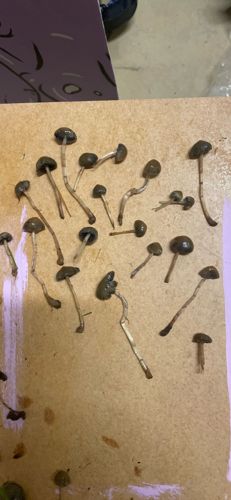
Physical Characteristics
Cap: 1.5-5 cm, hemispheric to convex, expanding to broadly convex or flat with age; often with a slight umbo. Color can be reddish-brown to cinnamon-brown when moist, fading to buff to grayish-white when dry (hygrophanous). Stipe: 4-12 cm long, 2-7 mm thick, equal, sometimes with a slightly enlarged base. Color is generally brownish to reddish-brown, often paler at the apex, sometimes pruinose. Gills: Adnate to adnexed, close, gray to black at maturity, often mottled. Spore print: Jet black.
Habitat & Growing Conditions
Found widely in North America and Europe, growing solitarily or gregariously on dung (especially horse and cow) or in well-manured grasslands, lawns, and gardens. It prefers disturbed soils rich in organic matter.
Season & Fruiting Time
Spring through autumn, sometimes persisting into early winter in warmer climates. Fruiting is typically abundant after rainfall.
Similar Looking Species
Panaeolus olivaceus (generally smaller and prefers dung). Panaeolus fimicola (often smaller, darker cap, prefers dung). Panaeolus Papilionaceus (has a distinct apical ring of darker spores on the cap margin and prefers dung). Some species of Psilocybe and Deconica can look similar, requiring careful identification, especially noting hygrophanicity, gill color, and spore print.
Ecological Role
Saprophytic, playing a role in nutrient cycling by decomposing organic matter, particularly dung and enriched soils. This helps break down complex organic compounds into simpler forms, making nutrients available for plants and other organisms.
Safety reminder
AI mushroom identification is a best-effort estimate and can be wrong. Never use it to decide whether a mushroom is safe to handle or eat — always confirm with a qualified mycologist before any consumption.
Identified on: 9/28/2025
Mode: Standard