Brite Brittlegill
Russula species (likely Russula sanguinaria or similar)
Type: gilled mushroom
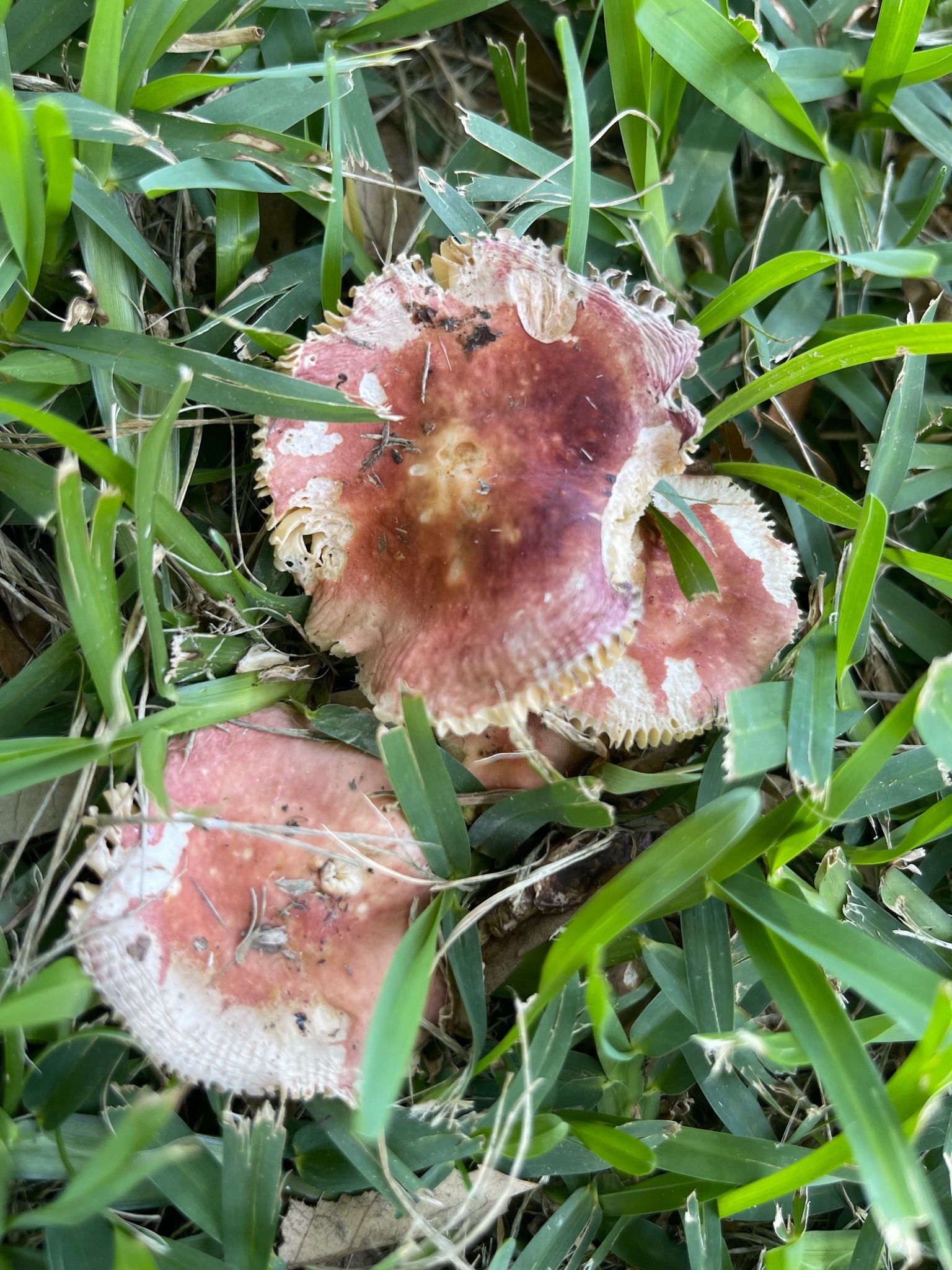
Physical Characteristics
Red to pink cap that fades with age, brittle texture that snaps like chalk, white to cream gills, white stipe, and lack of a partial veil or volva. The cap margin often becomes striate (lined) in older specimens.
Habitat & Growing Conditions
Typically found on the ground in grassy areas near trees or within mixed woodlands. They form symbiotic relationships with the roots of both coniferous and deciduous trees.
Season & Fruiting Time
Summer and Autumn, appearing during periods of high humidity and after significant rainfall.
Similar Looking Species
Russula emetica (indistinguishable without microscopy), Russula rosea (harder flesh, different reaction to chemicals), and various other red-capped Russula species which are notoriously difficult to distinguish in the field.
Ecological Role
Mycorrhizal, forming a vital mutualistic relationship with tree roots to exchange nutrients and water.
Fruiting Body
The cap is initially convex, flattening or becoming depressed with age, red to rose-pink, often with white patches where skin is damaged or weathered. The hymenophore consists of white to pale cream gills that are brittle. The stipe is cylindrical, white, and lacks a ring.
Size
Cap diameter 3-10 cm; stipe length 3-8 cm, width 1-2.5 cm.
Spore Print
White to pale cream
Distribution
Widely distributed across North America and Europe, with various related species found globally in temperate forests.
Identification Tips
The 'snapping' test: if the stem breaks cleanly like a piece of chalk rather than fraying into fibers, it is a member of the Russulaceae family. Note the red cap and white gills reaching the stem.
Interesting Facts
Members of the genus Russula are known for their bright colors and brittle structure caused by spherical cells called sphaerocysts. There are hundreds of red-capped Russula species that often require microscopic analysis of spores or chemical tests on the cap skin for definitive identification.
Safety reminder
AI mushroom identification is a best-effort estimate and can be wrong. Never use it to decide whether a mushroom is safe to handle or eat — always confirm with a qualified mycologist before any consumption.
Identified on: 5/16/2026
Mode: Standard