Artist's Conk
Ganoderma applanatum
Type: Polypore
Physical Characteristics
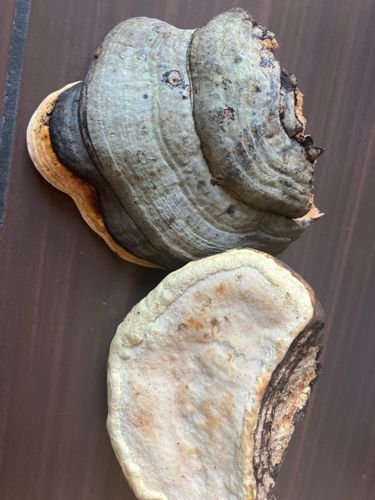
The Artist's Conk is a large, perennial bracket fungus. The cap is broadly hoof-shaped or shelf-like, typically 10-75 cm wide, sessile, and woody hard. The upper surface is usually dull gray to grayish-brown, often zoned, and can be covered with a fine layer of white powder (spores) in older specimens. The margin is usually thick and rounded. The most distinctive feature is the white pore surface on the underside, which bruises dark brown almost instantly when touched or scratched, allowing for 'drawing' on the surface, hence the common name. The flesh is tough, corky, and brownish.
Habitat & Growing Conditions
It is a common saprophytic and parasitic fungus, growing on the stumps, trunks, and roots of dead or living deciduous trees, occasionally on conifers. It causes white rot in the heartwood of its hosts. It can be found in forests, woodlands, and urban areas wherever suitable host trees are present.
Season & Fruiting Time
It is perennial, meaning it produces new growth year after year. While spores are released throughout the year, new growth is most evident in warmer, humid seasons. It can be found year-round.
Similar Looking Species
Similar species include other Ganoderma species, such as Ganoderma adspersum (which tends to have a thicker, less flattened margin and often a more brownish pore surface when young), and sometimes Ganoderma lucidum (Reishi) which is typically lacquered and shiny. Ganoderma brownii is another similar species, often found on conifer wood and having a more distinctly ridged upper surface. The unique bruising of the pore surface is a key distinguishing characteristic for G. applanatum.
Ecological Role
Ganoderma applanatum is a significant decomposer of wood (saprophyte), causing white rot in dead hardwoods, thus recycling nutrients back into the ecosystem. As a parasite, it can infect living trees, leading to decay of the heartwood which can weaken the tree and eventually contribute to its fall. It plays an important role in forest ecosystems by breaking down woody debris.
Safety reminder
AI mushroom identification is a best-effort estimate and can be wrong. Never use it to decide whether a mushroom is safe to handle or eat — always confirm with a qualified mycologist before any consumption.
Identified on: 9/21/2025
Mode: Standard