Jelly Tooth Fungus
Pseudohydnum gelatinosum
Type: jelly fungus
Physical Characteristics
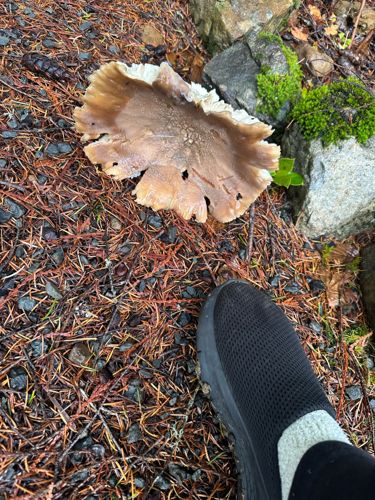
The fruit body is typically fan-shaped, kidney-shaped, or spatulate (spoon-shaped) and can grow up to 10 cm across. It has a translucent, gelatinous texture, and its color ranges from whitish to grayish to brownish. The underside (fertile surface) is covered with soft, tooth-like spines (hydnoid), which are also gelatinous and translucent. The upper surface is often covered in small, fine hairs. It usually lacks a distinct stalk, or has a very rudimentary lateral one.
Habitat & Growing Conditions
This fungus is saprobic, growing on decaying coniferous wood, particularly logs, stumps, and branches of fir, spruce, and hemlock. It prefers moist, cool environments in coniferous or mixed forests.
Season & Fruiting Time
It is most commonly found during the late summer and autumn months, often appearing after periods of rain.
Similar Looking Species
There are no other readily similar species that are gelatinous and have teeth on the underside in North America or Europe. It's quite distinctive due to its combination of gelatinous texture and toothed hymenium. However, other gelatinous fungi exist which do not have teeth.
Ecological Role
Pseudohydnum gelatinosum is a saprobic fungus, meaning it obtains nutrients by decomposing dead organic matter. It plays a role in the decomposition of fallen coniferous wood, recycling nutrients back into the forest ecosystem.
Safety reminder
AI mushroom identification is a best-effort estimate and can be wrong. Never use it to decide whether a mushroom is safe to handle or eat — always confirm with a qualified mycologist before any consumption.
Identified on: 12/10/2025
Mode: Standard