Giant puffball
Calvatia gigantea
Type: Puffball
Physical Characteristics
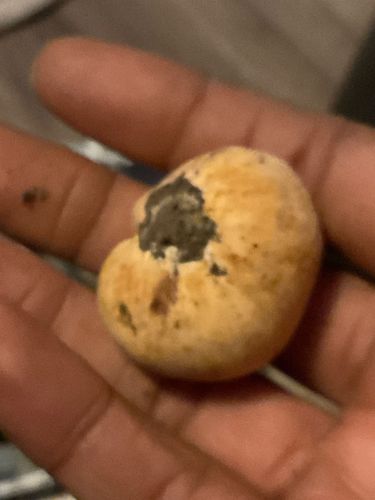
The fruit body is typically round to obovoid, 10-60 cm (4-24 in) or more in diameter, usually white or off-white, and smooth to finely felty-tomentose. As it matures, the surface can crack and become a yellowish to brownish color. The interior (gleba) is white and firm when young, eventually turning yellowish-green and then olive-brown to dark brown, becoming powdery with spores. There is no distinct stalk.
Habitat & Growing Conditions
Found in grasslands, pastures, meadows, and deciduous forests, often in areas with rich soil. It can grow solitarily or in groups, sometimes in rings ('fairy rings').
Season & Fruiting Time
Late summer to autumn, typically after periods of rain.
Similar Looking Species
Some species of "earthballs" (e.g., Scleroderma species) can look like small, young puffballs but have a much tougher outer skin and a dark purplish to black interior, even when young. Young "common puffballs" (Lycoperdon perlatum) are smaller and often pear-shaped with warts. The distinguishing feature for Calvatia gigantea is its massive size and almost perfectly round shape.
Ecological Role
Saprobic, meaning it obtains nutrients from decaying organic matter in the soil. It plays a role in nutrient cycling by breaking down complex organic compounds.
Safety reminder
AI mushroom identification is a best-effort estimate and can be wrong. Never use it to decide whether a mushroom is safe to handle or eat — always confirm with a qualified mycologist before any consumption.
Identified on: 10/6/2025
Mode: Standard