Community find
Bleeding Toothed Crust
Steccherinum ochraceum
- Group
- Crust fungus
- Season
- It can be found year-round, but is most prominent from late summer through autumn and into winter, especially in mild climates, as it is relatively long-lasting.
- Habitat
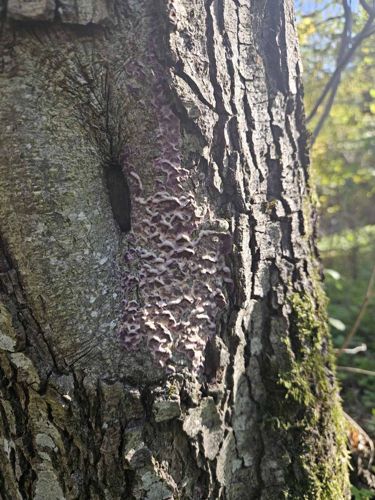
- It is a saprophytic fungus, growing on dead deciduous wood, especially fallen branches and logs, but can also be found on standing deadwood. It prefers damp, shady conditions in woodlands and forests. Often found on alder, beech, birch, oak, and willow.
- Key characteristics
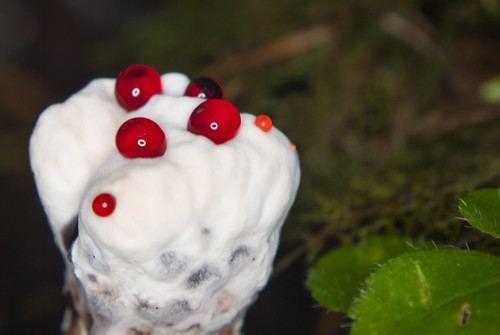
- This crust fungus forms thin, resupinate (flat against the substrate) patches. The hymenial surface (spore-bearing surface) is covered with small, conical teeth or spines, which are typically whitish, cream, or yellowish-ochre in color. When bruised or cut, it can sometimes exude reddish droplets, giving it its 'bleeding' common name. The margin can be whitish and velvety. It is typically a few millimeters thick and can spread several centimeters or even decimetres across the wood surface.
- Look-alikes
- Other toothed crust fungi exist, but the reddish exudate and the specific color and shape of its teeth help distinguish it. *Steccherinum fimbriatum* is another toothed crust that has a more distinctly fringed margin and generally lacks the bleeding characteristic. Several species of *Hydnellum* or *Phellodon* are also toothed but are typically stipitate (have a stem) and grow on the ground, not directly on wood.
- Ecological role
- As a saprophyte, it plays a crucial role as a decomposer in forest ecosystems. It breaks down cellulose and lignin in dead wood, returning nutrients to the soil. This process helps to recycle organic matter and maintain forest health, contributing to the carbon cycle.