Community find
Brite Brittlegill
Russula species (likely Russula sanguinaria or similar)
- Group
- gilled mushroom
- Spore print
- White to pale cream
- Size
- Cap diameter 3-10 cm; stipe length 3-8 cm, width 1-2.5 cm.
- Season
- Summer and Autumn, appearing during periods of high humidity and after significant rainfall.
- Habitat
- Typically found on the ground in grassy areas near trees or within mixed woodlands. They form symbiotic relationships with the roots of both coniferous and deciduous trees.
- Distribution
- Widely distributed across North America and Europe, with various related species found globally in temperate forests.
- Key characteristics
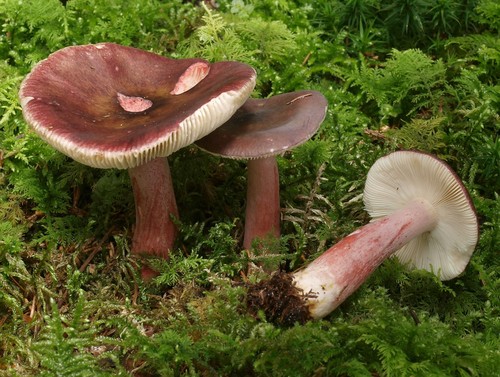
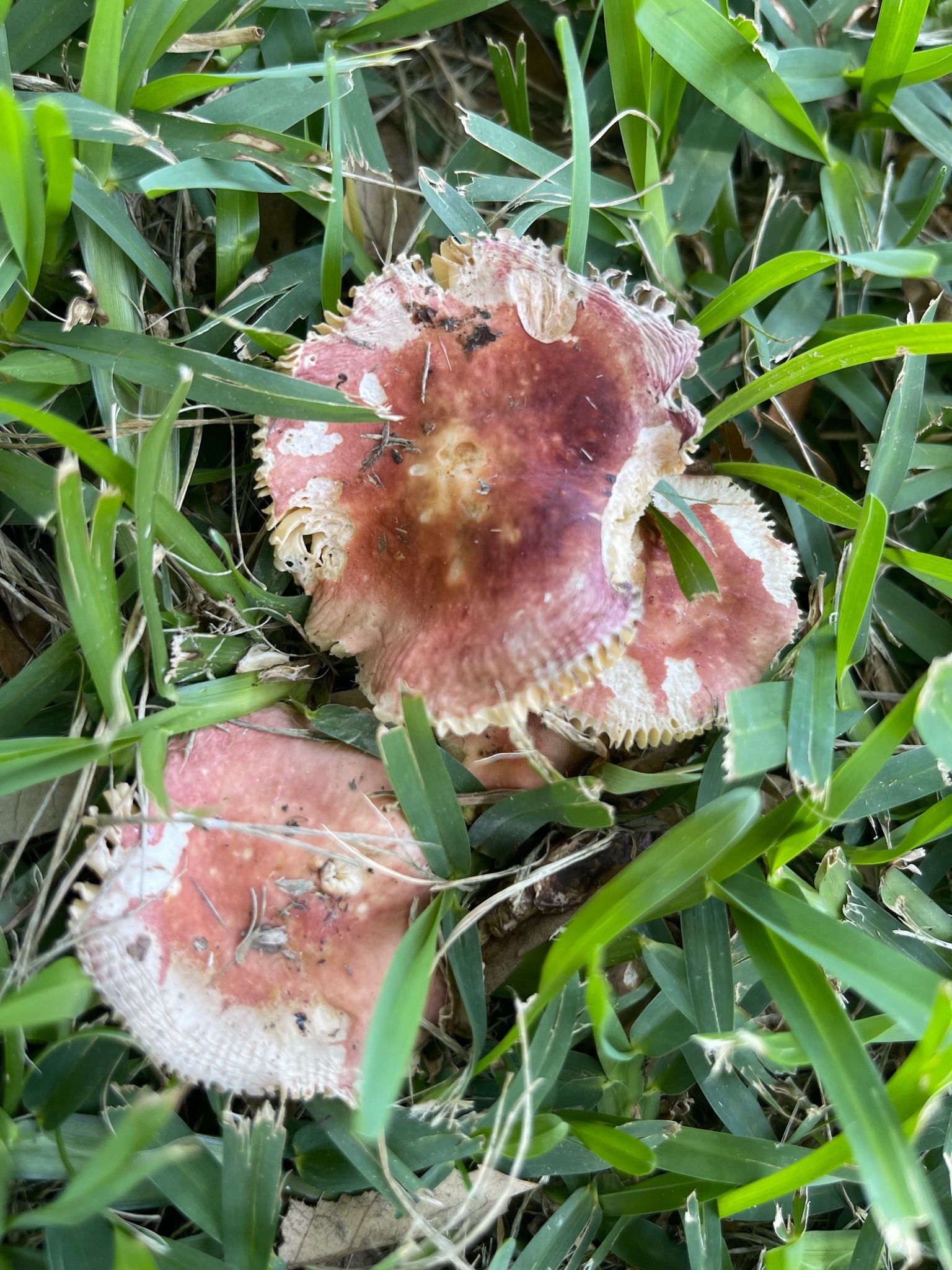
- Red to pink cap that fades with age, brittle texture that snaps like chalk, white to cream gills, white stipe, and lack of a partial veil or volva. The cap margin often becomes striate (lined) in older specimens.
- Fruiting body
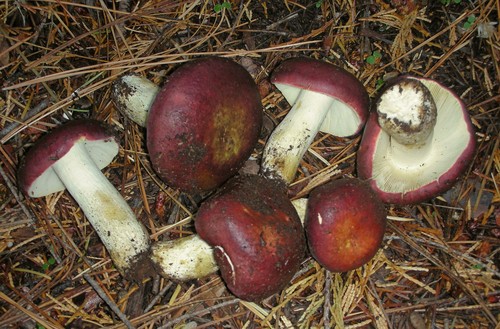
- The cap is initially convex, flattening or becoming depressed with age, red to rose-pink, often with white patches where skin is damaged or weathered. The hymenophore consists of white to pale cream gills that are brittle. The stipe is cylindrical, white, and lacks a ring.
- How to recognise it
- The 'snapping' test: if the stem breaks cleanly like a piece of chalk rather than fraying into fibers, it is a member of the Russulaceae family. Note the red cap and white gills reaching the stem.
- Look-alikes
- Russula emetica (indistinguishable without microscopy), Russula rosea (harder flesh, different reaction to chemicals), and various other red-capped Russula species which are notoriously difficult to distinguish in the field.
- Ecological role
- Mycorrhizal, forming a vital mutualistic relationship with tree roots to exchange nutrients and water.
- Notes
- Members of the genus Russula are known for their bright colors and brittle structure caused by spherical cells called sphaerocysts. There are hundreds of red-capped Russula species that often require microscopic analysis of spores or chemical tests on the cap skin for definitive identification.