Oak Maze Gill
Daedalea quercina
Type: Bracket fungus
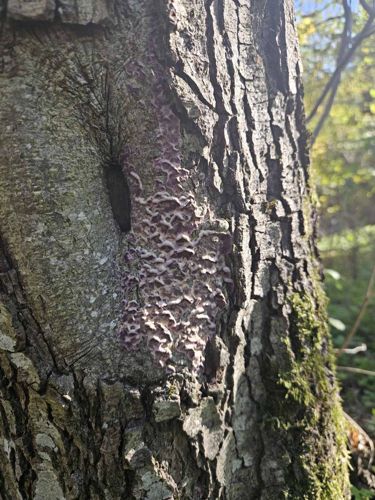
Physical Characteristics
The fruit body is corky to woody, semicircular or fan-shaped, and usually 3 to 20 cm wide, though larger specimens can be found. The upper surface is light brown to grayish, often with concentric zones, and becomes rough and ridged with age. The distinguishing feature is the labyrinthine (maze-like) pore surface on the underside, which is whitish to pale brown. The pores are elongated and resemble gills fused together, forming intricate patterns.
Habitat & Growing Conditions
Typically found on dead hardwood, especially oak (Quercus species), but can occasionally be found on other hardwoods. It causes a white rot in the wood.
Season & Fruiting Time
Perennial; fruit bodies can be found year-round, but new growth is often more prominent from summer to fall.
Similar Looking Species
Lenzites betulina (Gilled Polypore) has true, thin, branching gills, not the thick, maze-like pores of Daedalea quercina. Trametes species can look similar from above but have distinctive pores, not labyrinthine.
Ecological Role
This fungus is a saprophyte, meaning it decomposes dead wood. It plays a crucial role in the forest ecosystem by breaking down fallen oak timber, recycling nutrients back into the soil, and creating habitat for various invertebrates.
Safety reminder
AI mushroom identification is a best-effort estimate and can be wrong. Never use it to decide whether a mushroom is safe to handle or eat — always confirm with a qualified mycologist before any consumption.
Identified on: 11/3/2025
Mode: Standard