Community find
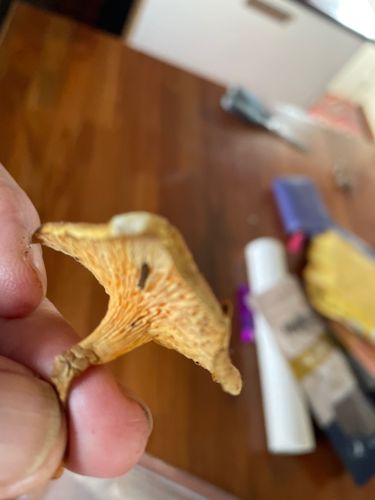
Chanterelle (possibly a dried or aged specimen)
Cantharellus spp.
- Group
- Gilled mushroom (though gills are more like blunt ridges/folds)
- Season
- Generally found from summer through fall, with peak seasons varying by region and specific species, often after rainfall.
- Habitat
- Chanterelles are typically found on the ground in woodland habitats, often among moss or leaf litter. They form mycorrhizal associations with various trees, including oaks, conifers, and beech. They prefer damp, humid conditions.
- Key characteristics
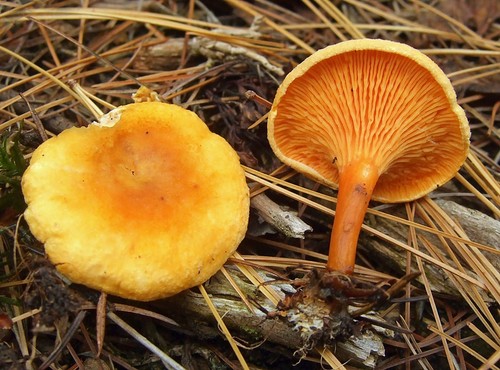
- The image shows a mushroom with a yellowish to orangish color. The underside features blunt, fold-like ridges that run down the stem, not true gills. The cap, though not fully visible, appears to be irregularly shaped. The stem is relatively short and thick, concolorous with the cap. The texture appears somewhat dry or aged given the visual cues.
- Look-alikes
- Similar looking species include the False Chanterelle (Hygrophoropsis aurantiaca), which has true, thin gills, and Omphalotus illudens (Jack O'Lantern mushroom), which is typically more orange, grows in clusters on wood, and has true gills. Craterellus species (trumpet chanterelles) are also similar but have smoother undersides or very faint veins.
- Ecological role
- Chanterelles are mycorrhizal fungi, meaning they form a symbiotic relationship with the roots of trees. They help their host trees absorb nutrients and water from the soil, while receiving sugars produced by the trees through photosynthesis. They are important components of forest ecosystems.