Community find
Deceiver
Laccaria laccata
- Group
- Gilled mushroom
- Season
- Summer to late autumn, sometimes appearing in spring after significant rain.
- Habitat
- Widely distributed, growing solitarily or in groups on soil in woodlands, especially under conifers and hardwoods. Prefers moist, mossy areas.
- Key characteristics
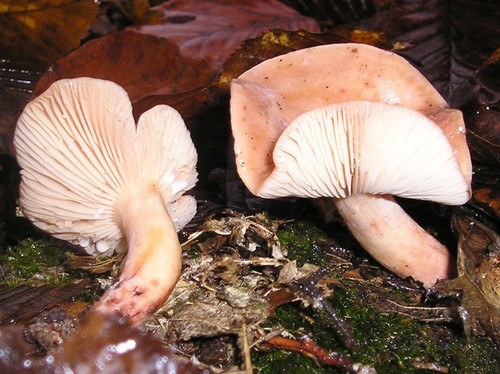
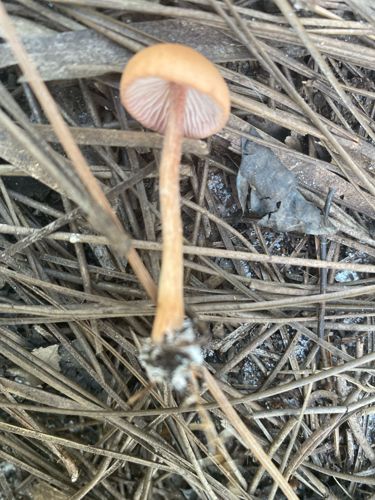
- Cap: 1-6 cm wide, convex to flat or depressed, often irregular; color variable from reddish-brown to orange-brown, fading when dry. Gills: adnate to decurrent, widely spaced, thick, pinkish-beige to flesh-colored. Stem: 3-10 cm long, 3-10 mm thick, central, fibrous, same color as cap or paler, often with fine hairs at the base. Spore print: white. Flesh: thin, watery, reddish. Odor and taste: mild.
- Look-alikes
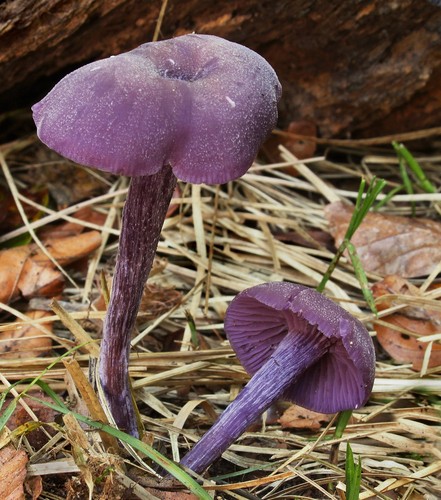
- Laccaria amethystina (Amethyst Deceiver) has a distinctive purple cap and gills. Other Laccaria species can look similar but usually differ in subtle characteristics like gill spacing, cap color, or size. Galerina species can also look similar, but generally have a rusty brown spore print and typically grow on wood. Carefully examining gill attachment, spore print, and habitat can help differentiate.
- Ecological role
- Mycorrhizal, forming symbiotic relationships with the roots of trees, exchanging nutrients and water. This mutualistic relationship benefits both the fungus and the host tree, improving nutrient uptake for the tree and providing sugars to the fungus.