Community find
Dog Vomit Slime Mold
Fuligo septica
- Group
- Slime Mold (Myxomycete)
- Season
- Typically appears from late spring through early autumn, especially after heavy rains or periods of high humidity.
- Habitat
- Found on decaying wood, mulch, leaf litter, and occasionally on living grass or ornamental plants. It thrives in moist, shaded environments where organic decomposition is occurring.
- Key characteristics
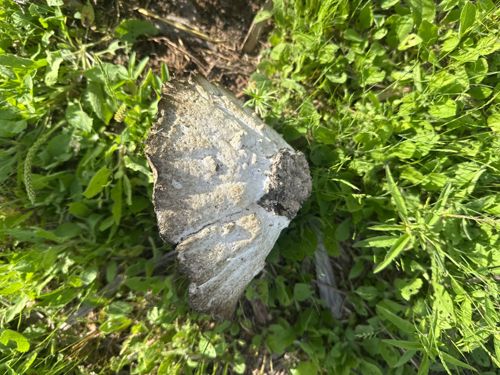
- Commonly appears as a bright yellow, bile-colored, or white irregular mass with a crusty, porous texture. As it matures, the surface dries to a darker tan or brown. It can reach sizes of up to 20 cm in diameter and has a foamy, sponge-like internal structure containing dark spores.
- Look-alikes
- Mucilago crustacea (White Slime Mold), which is generally whiter and has a more distinctly beaded or crystalline texture compared to the smoother early stages of Fuligo septica.
- Ecological role
- It is a saprobic organism that acts as a decomposer. It moves via a plasmodial stage to feed on bacteria, spores, and other organic matter, playing a vital role in nutrient cycling within soil and mulch ecosystems.