Sordid Blewit
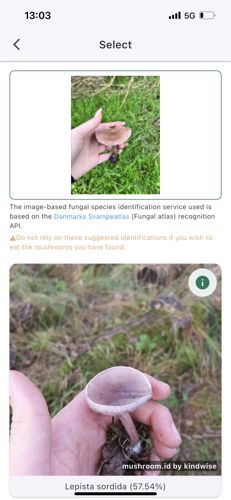
Lepista sordida
Type: Gilled mushroom
Physical Characteristics
The cap of Lepista sordida is typically convex when young, flattening out with age, often with a wavy or irregular margin. It usually ranges from 3-10 cm in diameter. The color can vary from purplish-brown to grayish-brown, often fading with age, and can be somewhat hygrophanous (changes color depending on moisture content). The surface is smooth and often somewhat greasy when moist. The gills are adnate to slightly decurrent, close, and typically range in color from pale lilac to grayish-lilac, becoming brownish with age as spores mature. The stem is 3-8 cm long and 0.5-1.5 cm thick, usually cylindrical or slightly club-shaped, often with a slightly swollen base. Its color is similar to the cap, but often paler, and it can have fine fibrils. The flesh is pale lilac to whitish, soft, and has a mild, somewhat sweet, or earthy smell. The spore print is pale pinkish-buff.
Habitat & Growing Conditions
Lepista sordida is a saprobic fungus, meaning it obtains nutrients from decaying organic matter. It commonly grows in scattered groups or singly on rich soils, lawns, gardens, compost heaps, wood chips, and disturbed ground. It is often found in urban and suburban areas, preferring nitrogen-rich sites.
Season & Fruiting Time
This species typically fruits in late summer and autumn, but can sometimes be found earlier or later depending on local climate conditions and moisture. It generally prefers cooler, moist weather.
Similar Looking Species
Lepista nuda (Wood Blewit) is a closely related species that is generally larger and more robust, with a stronger purplish color and a more fragrant odor. Lepista irina and Lepista personata are also similar in appearance but can be distinguished by differences in cap color, gill attachment, overall size, and habitat preferences. Experienced identification is required to differentiate between these species.
Ecological Role
Lepista sordida is a saprobic fungus, playing a crucial role in decomposition by breaking down organic matter in the soil. This process helps to recycle nutrients back into the ecosystem, making them available for plant growth. As a decomposer, it contributes to soil health and nutrient cycling in its preferred habitats.
Safety reminder
AI mushroom identification is a best-effort estimate and can be wrong. Never use it to decide whether a mushroom is safe to handle or eat — always confirm with a qualified mycologist before any consumption.
Identified on: 11/3/2025
Mode: Standard