Big Laughing Gym
Gymnopilus junonius
Type: gilled mushroom
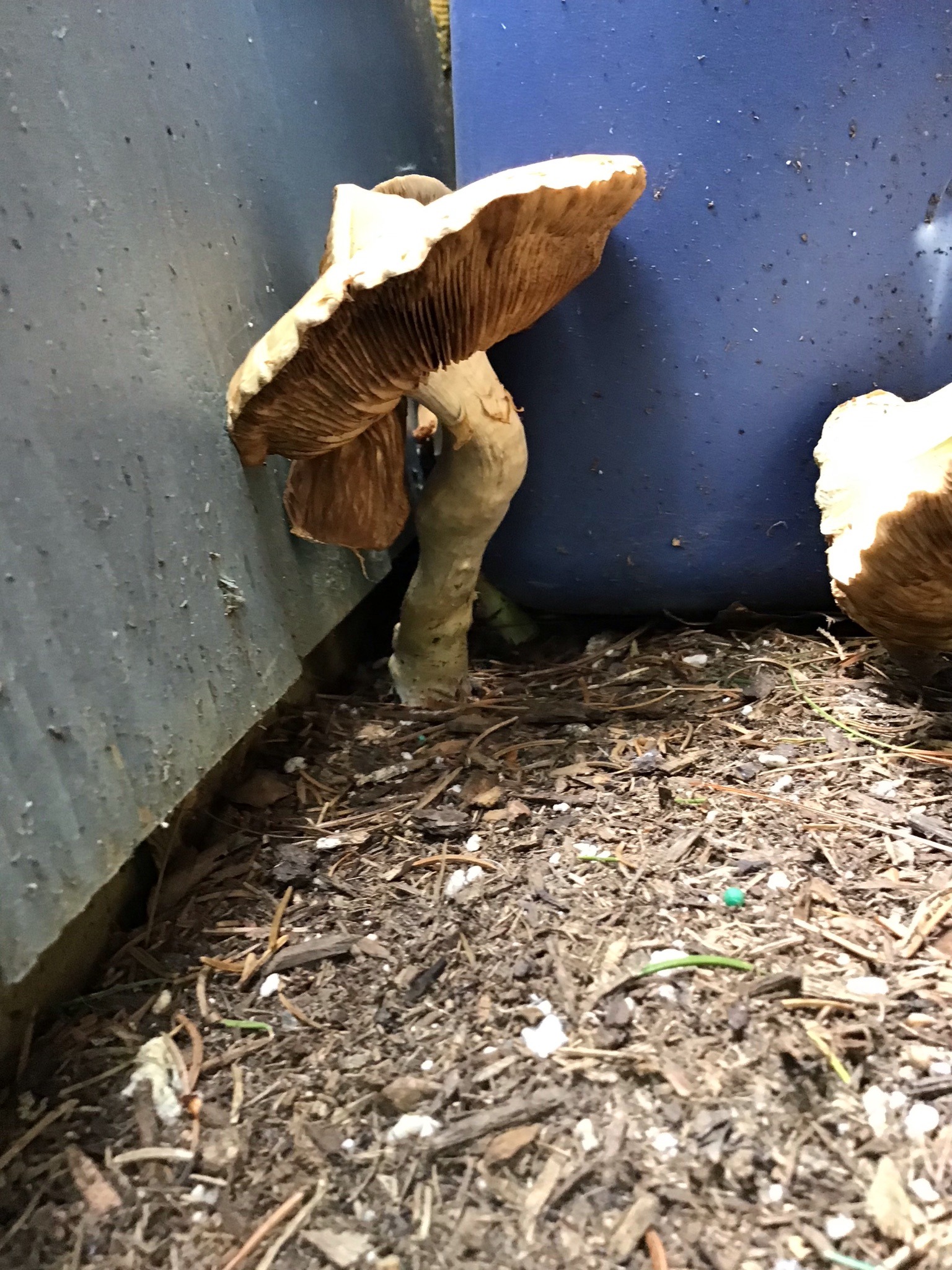
Physical Characteristics
Large, sturdy mushroom with an orange-yellow to ochre-brown cap. It features a persistent ring on the stem and rusty-orange gills that turn brown with age. The flesh is firm and typically has a bitter taste.
Habitat & Growing Conditions
Found growing in clusters on dead wood, stumps, or at the base of living deciduous and coniferous trees. It is also common on buried wood or wood mulch.
Season & Fruiting Time
Commonly seen in late summer to autumn, or winter in milder climates like California.
Similar Looking Species
Gymnopilus luteus (smaller, different chemical reactions), Armillaria species (white spores), Cortinarius species (cobweb-like veil instead of a persistent ring).
Ecological Role
Primarily saprophytic, acting as a wood-rot agent by breaking down cellulose and lignin in dead or dying timber.
Fruiting Body
Cap is convex to flat, often with a slight central bump, surface is dry and slightly scaly. Gills are crowded and adnate or slightly decurrent. Stipe is thick, often swollen in the middle, and features a membranous ring near the top.
Size
Cap diameter 5-20cm; stipe 5-20cm long and 1-5cm thick.
Spore Print
Rusty orange to reddish-brown
Distribution
Widely distributed throughout North America, Europe, Asia, and Australia.
Identification Tips
Look for the large size, growth on wood, presence of a ring on the stipe, and the characteristic rusty-orange spore print found on the ring or ground below.
Interesting Facts
The 'junonius' part of its name refers to Juno, the Roman goddess. This genus is known for containing many species that look identical without microscopic analysis or DNA sequencing.
Safety reminder
AI mushroom identification is a best-effort estimate and can be wrong. Never use it to decide whether a mushroom is safe to handle or eat — always confirm with a qualified mycologist before any consumption.
Identified on: 5/19/2026
Mode: Standard