Chanterelle
Cantharellus cibarius
Type: gilled mushroom
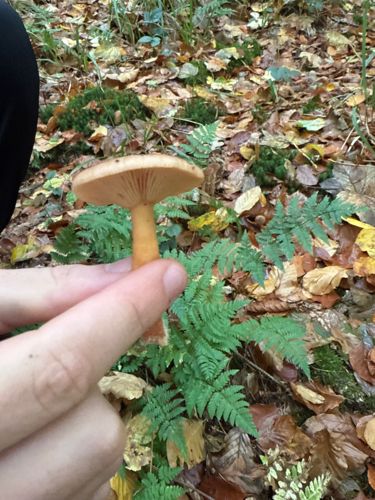
Physical Characteristics
The cap of Cantharellus cibarius is typically 2-10 cm wide, funnel-shaped or irregularly lobed, often depressed in the center, and has a wavy margin. Its color ranges from egg-yolk yellow to golden yellow or orange-yellow. The underside features distinctive blunt, gill-like ridges (not true gills) that are decurrent (running down the stem). These ridges are often lighter than the cap, concolorous with the stem, and fork irregularly. The stem is solid, tapering downwards, 2-8 cm tall and 0.5-2 cm thick, the same color as the cap or slightly paler. The flesh is firm and whitish to pale yellow. It has a characteristic fruity aroma, sometimes described as apricot-like.
Habitat & Growing Conditions
Chanterelles are mycorrhizal fungi, meaning they form symbiotic relationships with tree roots. They are commonly found growing on the ground in mossy areas, especially under broadleaf trees (like oak, beech) and conifers (like spruce, pine). They prefer moist, often acidic soils in deciduous and coniferous forests.
Season & Fruiting Time
Chanterelles are typically found from summer through autumn, often peaking after periods of rain. Their fruiting season is generally from July to October, depending on the region and weather conditions.
Similar Looking Species
Similar looking species include the False Chanterelle (Hygrophoropsis aurantiaca), which has true, thinner, and more orange gills, and the Jack O'Lantern Mushroom (Omphalotus illudens), which grows in dense clusters on wood, has true gills, and is often bioluminescent. Other similar-looking species may include other Cantharellus species, which often require microscopic examination for definitive identification.
Ecological Role
Chanterelles are mycorrhizal symbionts, forming mutually beneficial relationships with the roots of various trees. They help their host trees absorb water and nutrients (especially phosphorus) from the soil, while the trees provide the fungi with carbohydrates produced through photosynthesis. This partnership is crucial for the health and growth of forests.
Safety reminder
AI mushroom identification is a best-effort estimate and can be wrong. Never use it to decide whether a mushroom is safe to handle or eat — always confirm with a qualified mycologist before any consumption.
Identified on: 10/25/2025
Mode: Standard