Community find
Magpie Inkcap
Coprinopsis picacea
- Group
- Gilled mushroom
- Season
- Appears from late summer to late autumn, often after periods of rain.
- Habitat
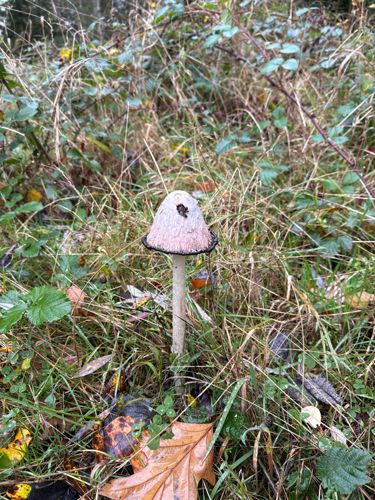
- Typically found growing singly or in small groups on decaying hardwood (especially beech) or on rich, disturbed soil, often in mossy areas or alongside paths in deciduous woods.
- Key characteristics
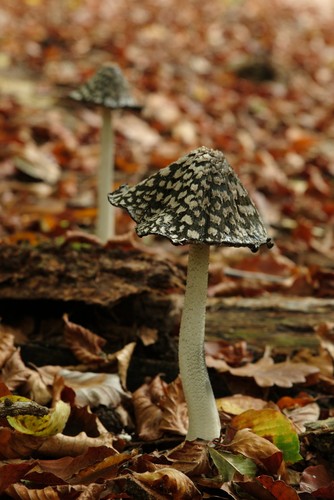
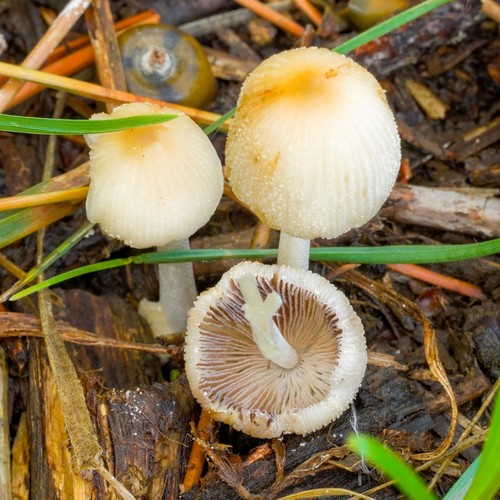
- The cap is initially egg-shaped, expanding to conical or bell-shaped, reaching 3-8 cm in diameter. It is dark brown to black, covered with conspicuous, shaggy white to grayish-white flakes or patches, resembling a magpie's plumage. As the mushroom matures, the cap and gills deliquesce (turn to black liquid). The gills are free, crowded, and initially white, becoming pinkish, then black as spores mature and deliquescence occurs. The stem is slender, hollow, white, and fibrous, usually 10-25 cm tall and 0.5-1.5 cm thick, often with a slightly bulbous base and sometimes a fragile ring that often disappears.
- Look-alikes
- Superficially similar to some other inkcap species, but the distinct dark cap with prominent white, shaggy patches makes *Coprinopsis picacea* quite unique. Some young specimens of *Coprinus comatus* (Shaggy Inkcap) can appear similar but are generally whiter and have a more fibrous, shaggy cap that usually retains its white appearance longer before deliquescing.
- Ecological role
- It is a saprobic fungus, playing a crucial role in the decomposition of dead hardwood and organic matter, returning nutrients to the soil. Its deliquescing gills help in spore dispersal.