Russula or Lactarius species
Russula sp. or Lactarius sp.
Type: gilled mushroom
Physical Characteristics
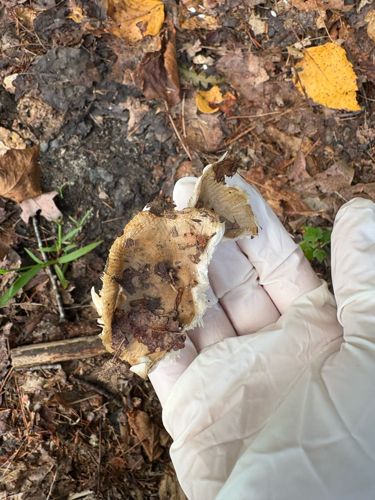
The image shows a gilled mushroom, likely a Russula or Lactarius species, which are known for their brittle, chalky flesh. The cap appears to be somewhat flattened or depressed in the center, with a broken margin, suggesting a relatively fragile structure. The color of the cap is a dull, light brownish-tan, with some darker, possibly bruised or stained areas. The gills are adnate to decurrent and appear off-white or cream-colored, visible on the underside while being held. The texture looks somewhat granular or mealy, characteristic of some species in these genera. The specimen is fragmented, making a full assessment challenging.
Habitat & Growing Conditions
Based on the image showing leaf litter and forest debris, this mushroom was likely found growing terrestrially in woodland environments. Russula and Lactarius species are commonly found in association with a variety of trees, including oaks, pines, birches, and aspens, appearing directly on the soil amidst leaf litter.
Season & Fruiting Time
Most Russula and Lactarius species are typically found fruiting from summer through autumn, especially after periods of rainfall. The presence of fallen leaves in the background suggests a late summer or early autumn finding.
Similar Looking Species
Many species within the Russula and Lactarius genera can look similar, making identification to species level difficult without more detailed features (like spore print, latex color for Lactarius, and a more intact specimen). Other look-alikes could include some species of Hebeloma or other gilled mushrooms, but the apparent brittle texture strongly suggests Russula or Lactarius. Distinguishing features often rely on the presence and color of latex in Lactarius, cap and gill color nuances, and microscopic characteristics.
Ecological Role
Russula and Lactarius species are primarily mycorrhizal, forming symbiotic relationships with the roots of trees (both deciduous and coniferous). They help trees absorb water and nutrients (especially phosphorus) from the soil, while the trees provide the fungi with carbohydrates produced through photosynthesis. They play a crucial role in nutrient cycling within forest ecosystems.
Safety reminder
AI mushroom identification is a best-effort estimate and can be wrong. Never use it to decide whether a mushroom is safe to handle or eat — always confirm with a qualified mycologist before any consumption.
Identified on: 9/2/2025
Mode: Standard