Common Puffball
Lycoperdon perlatum
Type: Puffball
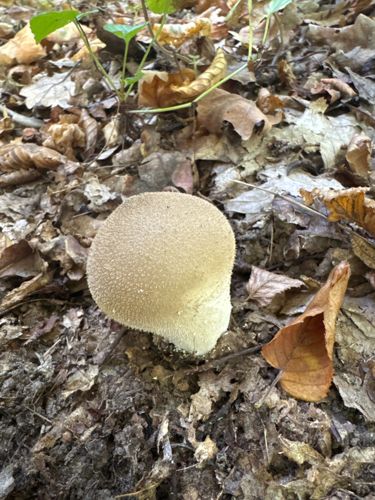
Physical Characteristics
Globose to pear-shaped fruiting body, typically 2-6 cm wide and 3-7 cm tall, often with a constricted base that forms a stalk-like structure. The surface is initially white to cream-colored, covered with small, conical spines and granules that often rub off to reveal a smoother surface underneath. As it matures, the color darkens to yellowish-brown, and a pore develops at the top for spore release. The interior (gleba) is white and firm when young, becoming olive-brown and powdery as it matures and spores develop.
Habitat & Growing Conditions
Terrestrial, growing solitarily or in groups on the ground, often in woodlands, fields, and along roadsides. It is saprobic, meaning it derives nutrients from decaying organic matter in the soil.
Season & Fruiting Time
Typically found from summer to autumn, and sometimes into early winter in milder climates.
Similar Looking Species
Lycoperdon pyriforme (Stump Puffball) is also pear-shaped but grows on wood and has a smoother surface. Lycoperdon foetidum (Dusky Puffball) has smaller, darker spines and emits an unpleasant odor. Young specimens of Amanita species in their 'egg' stage can sometimes be mistaken for puffballs, but a cross-section of an Amanita will reveal the developing cap and gills inside.
Ecological Role
Saprobic, playing a crucial role in nutrient cycling by decomposing organic matter in the soil and leaf litter. This process returns essential nutrients to the ecosystem, supporting plant growth and overall soil health.
Safety reminder
AI mushroom identification is a best-effort estimate and can be wrong. Never use it to decide whether a mushroom is safe to handle or eat — always confirm with a qualified mycologist before any consumption.
Identified on: 9/21/2025
Mode: Standard