Bleeding Toothed Crust
Steccherinum ochraceum
Type: Crust Fungus
Physical Characteristics
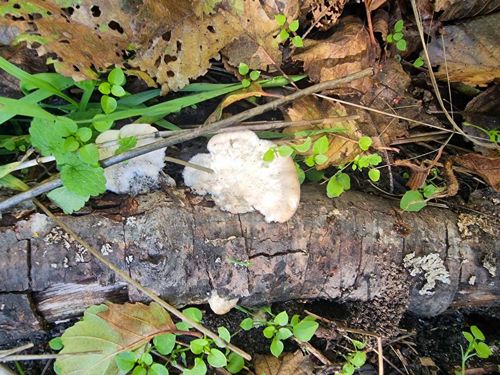
The fruit body is effused to pileate, meaning it forms a crust-like patch on the substrate, often with small, shelf-like caps (pilei) extending outwards. The color is typically cream to yellowish-ochre. The underside (hymenial surface) is covered with small, tooth-like projections (spines) which are a defining characteristic. These spines can sometimes exude a reddish liquid, hence the 'bleeding' in its common name, though this is not always visible. It is tough and leathery when fresh, becoming brittle when dry. The margins are often pale, fimbriate (fringed), or resupinate (adhering to the substrate).
Habitat & Growing Conditions
It is a saprophytic fungus, typically found growing on dead hardwood, especially fallen branches and logs. It can occasionally grow on coniferous wood. It prefers moist conditions in forests and woodlands.
Season & Fruiting Time
It can be found year-round, but is most common in late summer and autumn when moisture levels are higher, facilitating its growth and fruiting.
Similar Looking Species
Similar-looking species include other crust fungi with teeth, such as species of Hydnum (which are typically terrestrial) or other Steccherinum species. Steccherinum fimbriatum has a more distinctly fimbriate margin and is often whiter. Careful examination of microscopic features and the presence/absence of bleeding can help differentiate it from other toothed crusts.
Ecological Role
As a saprophyte, Steccherinum ochraceum plays a crucial role in the decomposition of dead wood, breaking down tough lignocellulosic materials. This process recycles nutrients back into the ecosystem, making them available for other organisms and contributing to soil health and forest regeneration. It aids in the natural process of woody debris breakdown in forest ecosystems.
Safety reminder
AI mushroom identification is a best-effort estimate and can be wrong. Never use it to decide whether a mushroom is safe to handle or eat — always confirm with a qualified mycologist before any consumption.
Identified on: 11/3/2025
Mode: Standard