Bolete
Boletus (genus)
Type: gilled mushroom
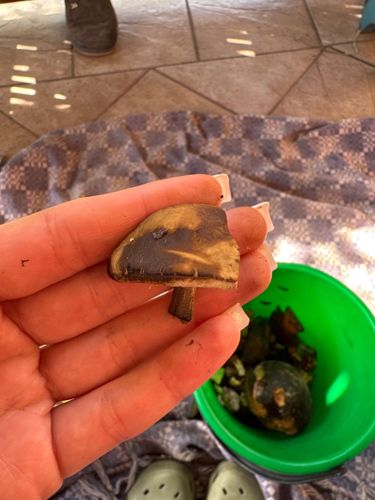
Physical Characteristics
The mushroom in the image appears to be a boletus species, characterized by its pores instead of gills under the cap. The cap is dark brown, almost black, with a slightly wrinkled or matte texture. The stem is relatively thick and short, lighter in color than the cap, and may show some reticulation (net-like pattern) or striations, though this is not entirely clear from the image. The underside of the cap shows pores rather than gills, which is typical for boletes. The overall size appears to be medium, fitting in the palm of a hand.
Habitat & Growing Conditions
Boletus species are typically found growing on the ground in woodlands and forests, often in association with specific tree types such as conifers (pine, spruce, fir) or deciduous trees (oak, beech, birch). They prefer well-drained soil and can be found in various forest types, from temperate to boreal regions.
Season & Fruiting Time
Most Boletus species are found from late summer through autumn, depending on the specific species and local climate conditions. Their appearance is often triggered by rainfall following dry periods and moderate temperatures.
Similar Looking Species
Many species within the Boletus genus and other genera in the family Boletaceae can look similar. Distinguishing features often involve spore print color, specific changes in flesh color when cut or bruised, cap and stem ornamentation (reticulation, dots), and microscopic features. For example, species in the genus Leccinum also have a stout appearance but often feature scabers (small, rough projections) on the stem. Tylopilus species are similar but typically have pinkish spore prints. Careful examination of all features is necessary for accurate identification.
Ecological Role
Boletus species are typically mycorrhizal, forming symbiotic relationships with the roots of trees. In this relationship, the fungus helps the tree absorb water and nutrients from the soil, especially phosphorus and nitrogen, while the tree provides the fungus with carbohydrates produced through photosynthesis. This mutualistic relationship is vital for the health and growth of many forest ecosystems.
Safety reminder
AI mushroom identification is a best-effort estimate and can be wrong. Never use it to decide whether a mushroom is safe to handle or eat — always confirm with a qualified mycologist before any consumption.
Identified on: 7/24/2025
Mode: Standard