Community find
Velvet Curtain Crust
Stereum subtomentosum
- Group
- crust fungus
- Spore print
- White
- Size
- Caps are typically 2-7 cm wide and 1-3 mm thick.
- Season
- Found throughout the year, but actively fruits from late summer through autumn.
- Habitat
- Grows on the dead wood of deciduous trees, often on fallen birch, beech, or oak logs and stumps, sometimes on standing dead trees.
- Distribution
- Widely distributed throughout the Northern Hemisphere, including North America, Europe, and parts of Asia.
- Key characteristics
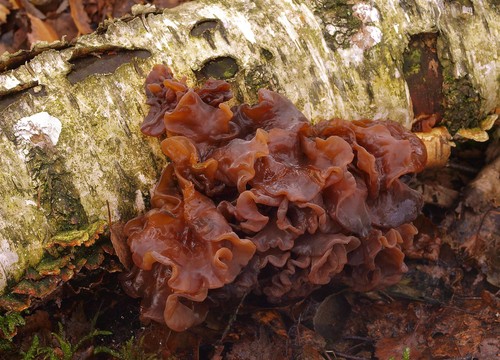
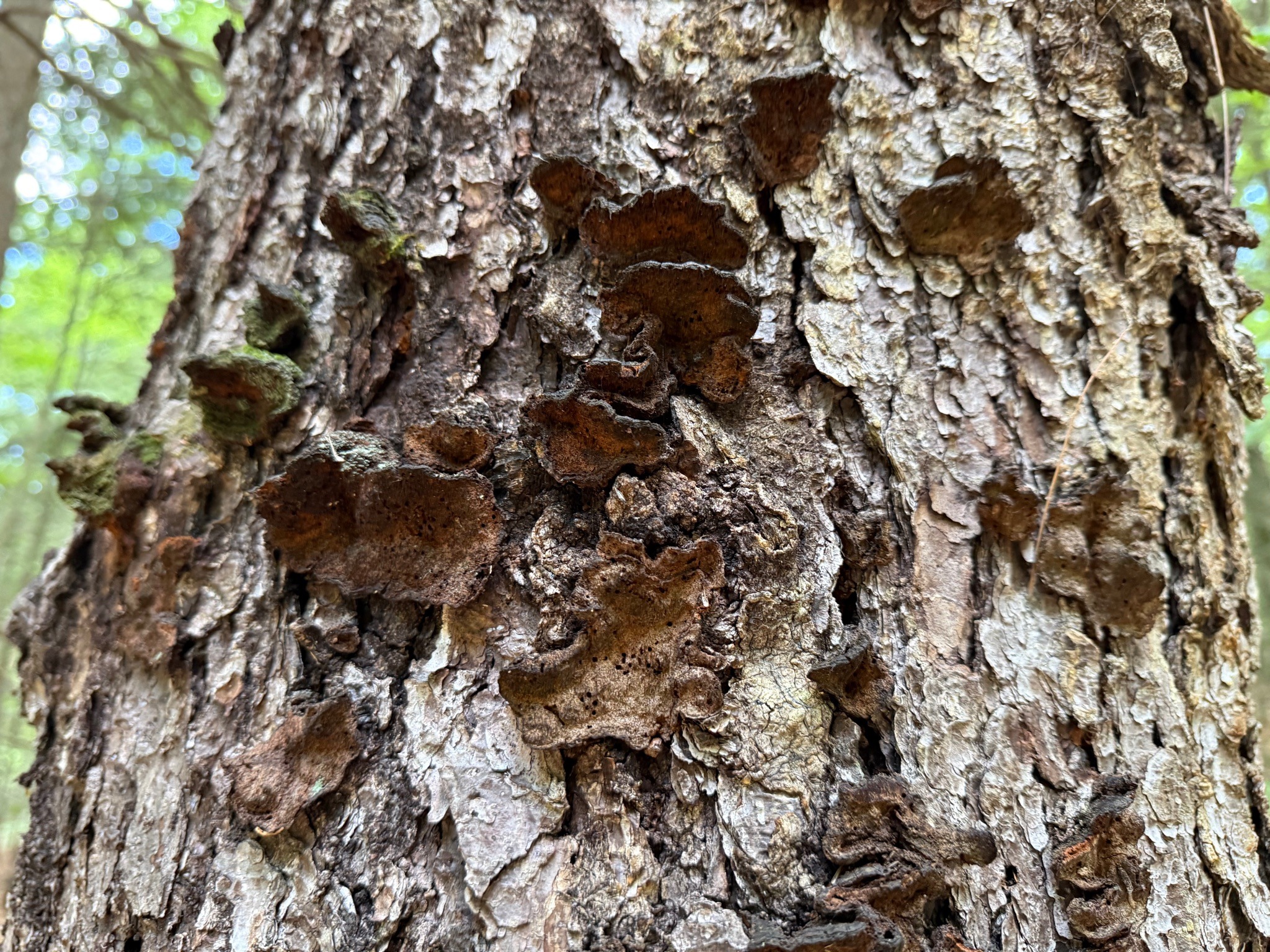
- Thin, flexible, fan-shaped or semicircular brackets. The upper surface is velvety or tomentose, often with concentric zones of different shades of brown, beige, or grey. It lacks a stem and grows in overlapping clusters. The underside is smooth (no pores or gills).
- Fruiting body
- The fruiting body is a thin, leathery cap that varies from 2 to 7 cm wide. It is sessile (no stem). The upper surface is finely hairy or velvety, often greenish due to algae. The hymenophore (fertile underside) is smooth and can be yellowish to brownish, turning yellowish when bruised when fresh.
- How to recognise it
- Look for a smooth (non-porous) underside that stains yellow when scratched (if fresh), a velvety upper surface, and thin, flexible texture. Unlike Polyporus species, it lacks holes or teeth on the bottom.
- Look-alikes
- Stereum hirsutum (Hairy Curtain Crust) which is generally smaller and more orange; Stereum ostrea (False Turkey Tail) which is larger and more shell-like with sharper concentric zones.
- Ecological role
- Saprophytic; it breaks down lignin and cellulose in hardwood, contributing to the decomposition process and nutrient cycling in forest ecosystems.
- Notes
- This fungus is known for its ability to produce various secondary metabolites that are of interest in biochemical research. It often serves as a substrate for various species of algae which gives the older brackets a green tint.