Oyster Mushroom
Pleurotus ostreatus
Type: gilled mushroom
Physical Characteristics
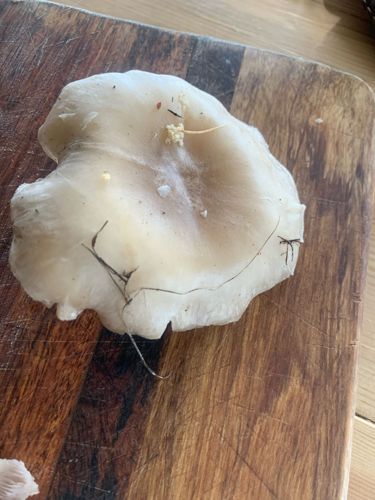
The visible mushroom appears to be a partial cap, possibly from a large gilled mushroom. The cap color is off-white to pale tan, smooth, and appears somewhat irregular in shape. The underside (not fully visible) would typically feature gills.
Habitat & Growing Conditions
Based on the appearance of what seems to be Oyster mushroom, these commonly grow on dead or dying hardwoods. They can be found on logs, stumps, and standing dead trees.
Season & Fruiting Time
Typically found from fall through spring in temperate climates, and can fruit year-round in milder regions. Fruiting is often triggered by cool, moist conditions.
Similar Looking Species
There are several species within the Pleurotus genus that look similar (e.g., Pleurotus pulmonarius, Pleurotus populinus), differing mostly in subtle color variations or preferred wood types. Some Crepidotus species can look superficially similar but are usually much smaller and grow on wood, often lacking a distinct stem, and have brown spore prints. Lentinus species also grow on wood but typically have tougher, more leathery caps and serrated gill edges.
Ecological Role
Most likely saprophytic, meaning it breaks down dead organic matter (like wood or leaf litter), recycling nutrients back into the ecosystem.
Safety reminder
AI mushroom identification is a best-effort estimate and can be wrong. Never use it to decide whether a mushroom is safe to handle or eat — always confirm with a qualified mycologist before any consumption.
Identified on: 8/21/2025
Mode: Standard