Panaeolus antillarum
Panaeolus antillarum
Type: gilled mushroom
Physical Characteristics
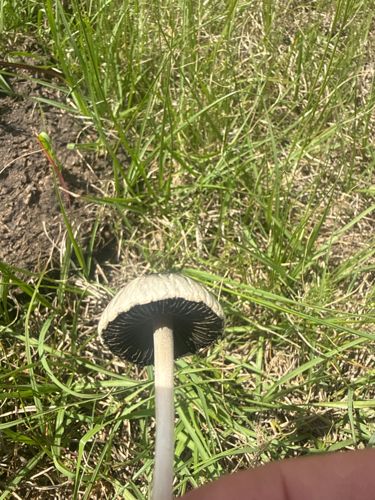
Cap is 2-4 cm wide, bell-shaped to hemispherical, smooth, and silvery-white to light gray. The cap surface is thick and often cracks in dry weather. Gills are crowded and turn black as they mature, typically with white edges. The stem is 4-20 cm long, solid, and whitish. The spore print is jet black.
Habitat & Growing Conditions
Grows directly on horse or cow dung, or in heavily manured soil and pastures. It is common in tropical and subtropical regions but can be found globally in suitable dung habitats.
Season & Fruiting Time
Typically found year-round in warm, tropical climates; in temperate zones, it appears from late spring through autumn, especially after heavy rains.
Similar Looking Species
Panaeolus semiovatus (has a distinct ring on the stem), Panaeolus cyanescens (bruises blue and has thinner cap flesh), and Protostropharia semiglobata (has a sticky cap and yellowish stem).
Ecological Role
Saprophytic mushroom that plays a vital role in the decomposition of herbivore dung, breaking down complex organic matter and returning nutrients to the soil.
Safety reminder
AI mushroom identification is a best-effort estimate and can be wrong. Never use it to decide whether a mushroom is safe to handle or eat — always confirm with a qualified mycologist before any consumption.
Identified on: 4/10/2026
Mode: Standard