Deer Mushroom
Pluteus cervinus
Type: gilled mushroom
Physical Characteristics
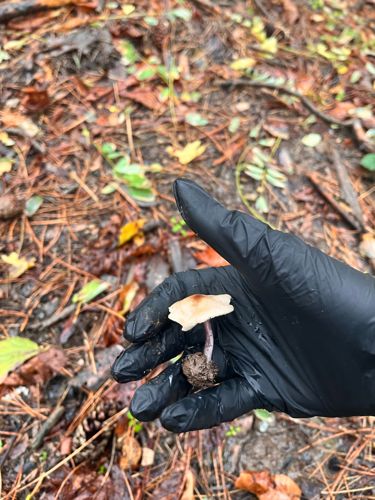
The cap of the Deer Mushroom can range from 3 to 12 cm in diameter, initially bell-shaped or convex, eventually flattening with a central bump (umbo). Its color varies from grayish-brown to dark brown, often with radiating fibers and a somewhat greasy or moist feel when fresh. The gills are free from the stem, broad, crowded, and start out white, turning pinkish as spores mature. The stem is typically 5-15 cm long and 0.5-2 cm thick, white to grayish-brown, often with darker longitudinal fibrils, and lacks a ring. The spore print is pink.
Habitat & Growing Conditions
This mushroom is a saprophyte, meaning it grows on decaying wood, stumps, logs, and wood debris, often in deciduous or mixed forests. It can also be found in gardens or disturbed areas where wood is present.
Season & Fruiting Time
It is most commonly found from spring through autumn, generally appearing after rain.
Similar Looking Species
Some species of Entoloma can look similar due to their pinkish gills and spore print, but Entoloma species typically have angular spores and not free gills. Pholiota species can also have similar colors but possess an annulus (ring) on the stem and have brown spore prints.
Ecological Role
As a saprophytic fungus, Pluteus cervinus plays a crucial role in breaking down dead wood, returning nutrients to the soil and contributing to the decomposition process in forest ecosystems.
Safety reminder
AI mushroom identification is a best-effort estimate and can be wrong. Never use it to decide whether a mushroom is safe to handle or eat — always confirm with a qualified mycologist before any consumption.
Identified on: 11/4/2025
Mode: Standard