Fly Agaric
Amanita muscaria
Type: gilled mushroom
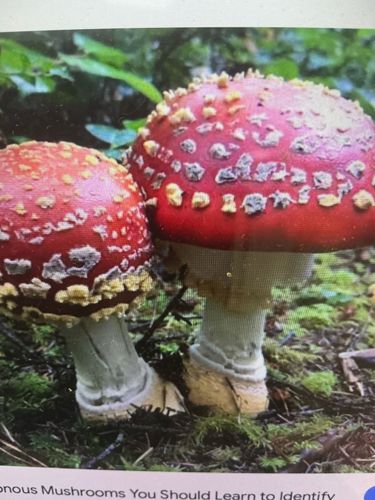
Physical Characteristics
The Amanita muscaria typically features a prominent red or orange-red cap, often adorned with white or yellowish wart-like patches, which are remnants of the universal veil. The cap can range from 8 to 20 cm (3 to 8 inches) in diameter, starting as globose or ovoid and flattening with age. The gills are white, crowded, and free or narrowly attached to the stem. The stem (stipe) is white, 5 to 20 cm (2 to 8 inches) tall, with a characteristic ring (annulus) that is typically fluted or ragged on the upper surface. The base of the stem is bulbous and often encased in several concentric rings or scales, forming a volva that is not sac-like but rather breaks into rings. The spore print is white.
Habitat & Growing Conditions
Amanita muscaria is commonly found growing on the ground in a mycorrhizal association with various tree species, particularly conifers (like pine, spruce, cedar) and deciduous trees (like birch and oak). It prefers acidic soils and can be found in forests, woodlands, and sometimes even in gardens or parks where its host trees are present.
Season & Fruiting Time
It is typically found fruiting from late summer through autumn, and sometimes into early winter in milder climates. Its appearance is often triggered by cool, moist conditions following periods of rain.
Similar Looking Species
Some similar-looking species include other members of the Amanita genus. Amanita gemmata (Jeweled Amanita) has a yellow to yellowish-brown cap, is generally smaller, and lacks the distinct prominent warts. Amanita pantherina (Panthercap) can be confused with less vibrant specimens of Amanita muscaria; it typically has a brown to grayish-brown cap with white warts, and its volva is typically more distinctly rimmed. Distinguishing features often involve careful observation of cap color, wart characteristics, stem and ring morphology, and the nature of the volva at the base of the stem.
Ecological Role
Amanita muscaria is an ectomycorrhizal fungus, forming a symbiotic relationship with the roots of certain trees. This relationship benefits both the fungus and the tree. The fungus helps the tree absorb water and nutrients (especially phosphorus and nitrogen) from the soil, while the tree provides the fungus with carbohydrates produced through photosynthesis. This plays a vital role in nutrient cycling and the health of forest ecosystems.
Safety reminder
AI mushroom identification is a best-effort estimate and can be wrong. Never use it to decide whether a mushroom is safe to handle or eat — always confirm with a qualified mycologist before any consumption.
Identified on: 7/24/2025
Mode: Standard