King Alfred's Cake or Cramp Ball
Daldinia concentrica
Type: Ascomycota
Physical Characteristics
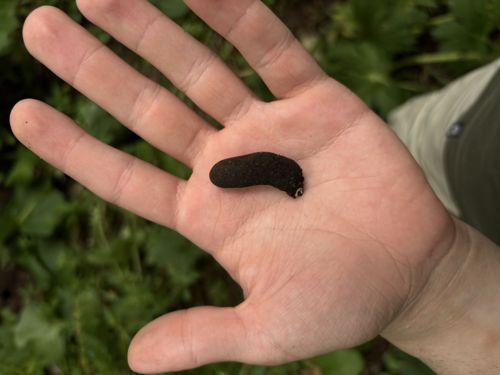
The fruit body is typically black, elongated, often somewhat club-shaped or cylindrical, and can be relatively small, usually up to a few centimeters long. It has a rough, somewhat lumpy or wrinkled surface due to the embedded perithecia, which are small, flask-shaped structures containing the spores. When mature, the perithecia often create small bumps on the surface, and a tiny pore (ostiole) at the apex through which spores are released can sometimes be seen. The internal flesh is tougher and can be whitish to grayish. The specimen in the image appears to be a typical mature specimen of the species, showing its characteristic black, cylindrical form and texture.
Habitat & Growing Conditions
This fungus is commonly found growing on dead and decaying wood of broadleaf trees, especially ash (Fraxinus), but also beech (Fagus), oak (Quercus), and other hardwoods. It can grow on fallen logs, stumps, or standing dead trees. It prefers damp, shady conditions in woodlands and forests.
Season & Fruiting Time
King Alfred's Cake can be found year-round, as its fruiting bodies are persistent and can last for several years. However, new growth and spore release are typically more active during damp periods, such as late summer, autumn, and mild winter months.
Similar Looking Species
There are a few other species in the Daldinia genus, such as Daldinia childiae, which can be distinguished by microscopic features and sometimes host preference. Some other black, crust-like fungi might superficially resemble it, but Daldinia concentrica is characterized by its internal concentric rings (visible when cut open) and its hard, charcoal-like texture. Other common species that sometimes resemble it include carbon balls (Hypoxylon spp.) but these typically lack the distinctive shape and internal structure of Daldinia concentrica.
Ecological Role
King Alfred's Cake is a saprophytic fungus, meaning it obtains nutrients by decomposing dead organic matter. Specifically, it is a significant decomposer of dead hardwood, playing a crucial role in nutrient cycling in forest ecosystems by breaking down tough woody material. By doing so, it helps return nutrients to the soil, making them available for other organisms.
Safety reminder
AI mushroom identification is a best-effort estimate and can be wrong. Never use it to decide whether a mushroom is safe to handle or eat — always confirm with a qualified mycologist before any consumption.
Identified on: 7/29/2025
Mode: Standard