False Parasol
Chlorophyllum molybdites
Type: gilled mushroom
Physical Characteristics
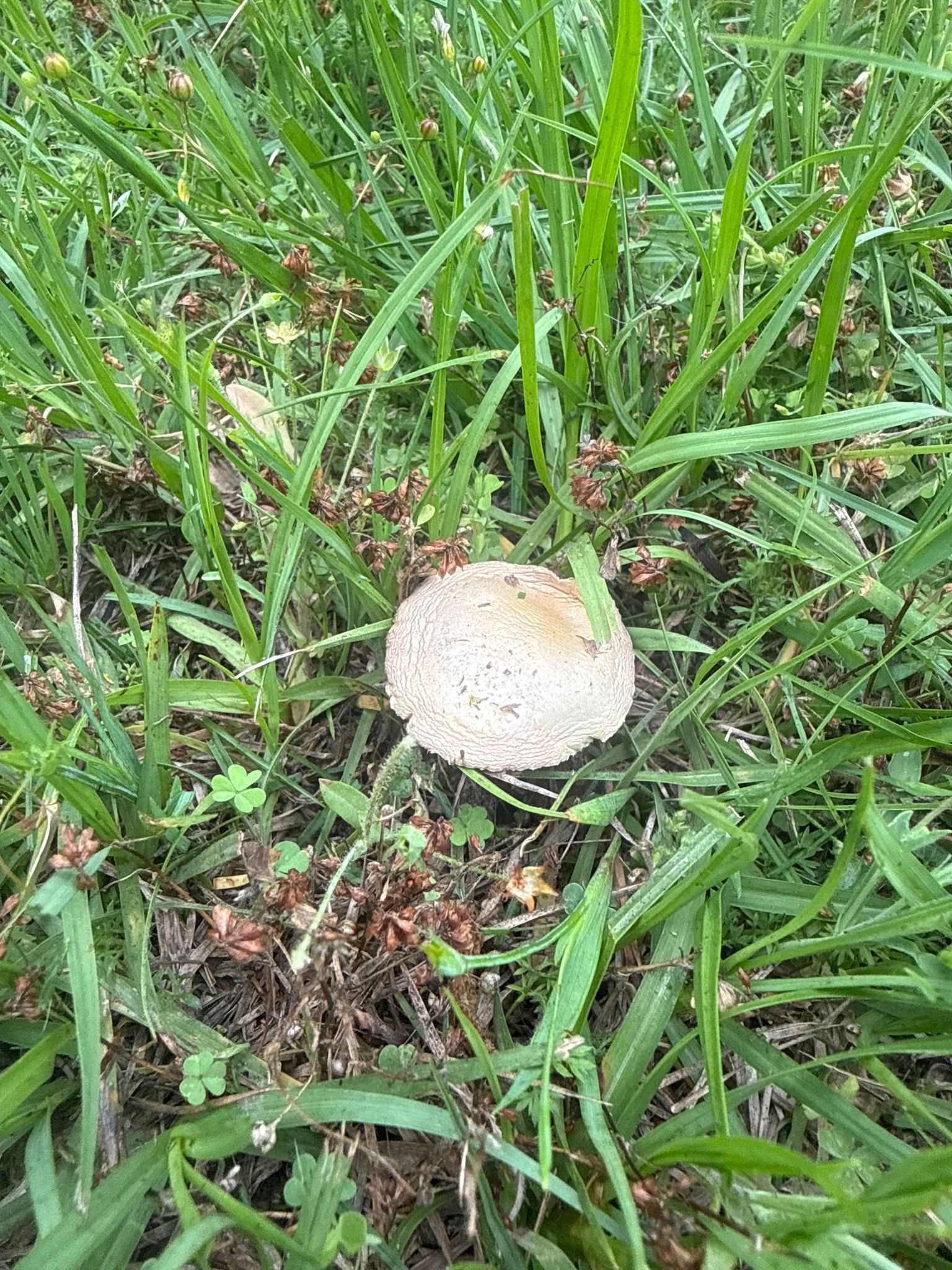
Large white cap with brownish scales (squamules) that concentrate toward the center. The gills start white but turn a distinctive greenish-gray as the spores mature. It has a tall, smooth stipe with a double-edged ring.
Habitat & Growing Conditions
Commonly grows in grassy areas such as lawns, parks, golf courses, and meadows. Frequently forms large 'fairy rings'.
Season & Fruiting Time
Typically appears from summer to autumn, especialmente after heavy rains or periods of high humidity.
Similar Looking Species
Chlorophyllum rhacodes (Shaggy Parasol) - has white spores; Macrolepiota procera (Parasol Mushroom) - has a patterned stipe and white spores.
Ecological Role
Saprophytic, breaking down organic matter in soil and grass.
Fruiting Body
Cap: Convex to flat, 5-30 cm wide, white surface covered in cinnamon-brown scales. Hymenophore: Free, crowded gills that turn dull green with age. Stipe: 5-25 cm long, smooth, white to brownish, with a thick, movable ring.
Size
Cap diameter 5-30 cm; Stipe length 5-25 cm, diameter 1-4 cm.
Spore Print
Green to dull olive-green
Distribution
Widely distributed in subtropical and temperate regions globally; very common in North America and Australia.
Identification Tips
A green spore print is the most definitive diagnostic feature. Look for the large size, brownish scales on a white cap, and the movable ring on the stem.
Interesting Facts
This species is famous for being the most common cause of mushroom ingestion incidents in North America due to its close resemblance to popular edible parasols. It often forms perfect circles known as fairy rings.
Safety reminder
AI mushroom identification is a best-effort estimate and can be wrong. Never use it to decide whether a mushroom is safe to handle or eat — always confirm with a qualified mycologist before any consumption.
Identified on: 4/18/2026
Mode: Standard