
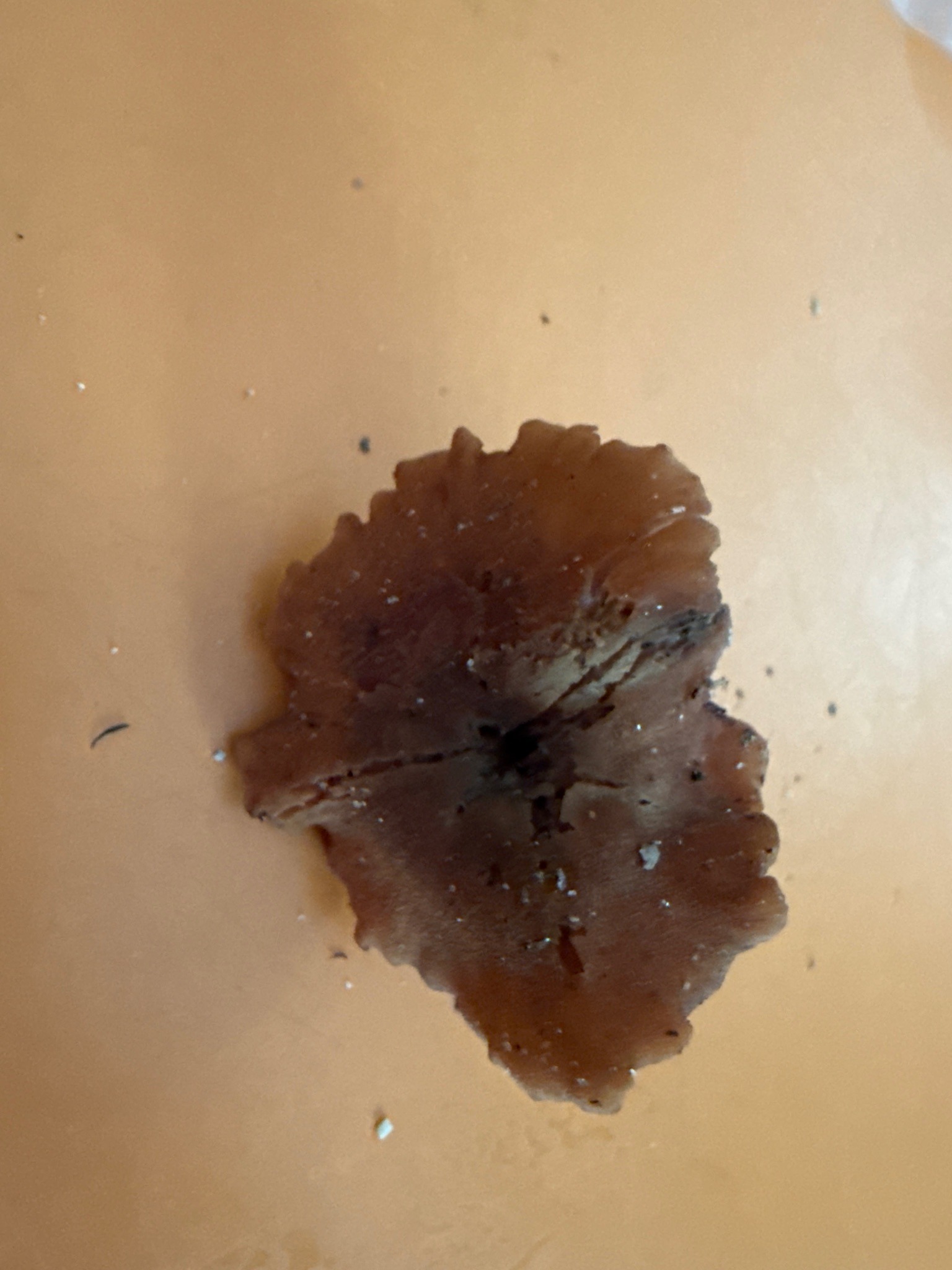
Community find
Amber Jelly Fungus
Exidia recisa
- Group
- jelly fungus
- Spore print
- White
- Size
- Individual lobes 1-3 cm in diameter; clusters can be several centimeters across.
- Season
- Typically found in autumn and winter, or early spring during wet periods.
- Habitat
- Grows on dead wood of broadleaf trees, specifically often found on fallen or attached dead twigs of willow, birch, and oak.
- Distribution
- Widespread throughout the Northern Hemisphere, including North America and Europe.
- Key characteristics
- Amber to reddish-brown, gelatinous but fairly firm, ear-like or conical translucent lobes that often fuse together; becomes shriveled and black when dry but revives with rain.
- Fruiting body
- Individual fruit bodies are 1-2 cm across, often clustering into larger masses. They are jelly-like, smooth or slightly veined, often somewhat cone-shaped or disc-shaped and attached at a point to the substrate. The hymenium (fertile surface) is smooth.
- How to recognise it
- Look for amber-colored, translucent, gelatinous masses on dead hardwood twigs during cool, wet weather. They will be firm to the touch compared to some other jelly fungi.
- Look-alikes
- Exidia glandulosa (Black Witch's Butter) which is darker/blacker and more flattened; Auricularia auricula-judae (Wood Ear) which is larger and more distinctly ear-shaped.
- Ecological role
- Saprophytic, breaking down dead hardwood branches and twigs.
- Notes
- The fungus can survive extreme desiccation by shrinking into a hard, inconspicuous crust, only to re-hydrate and continue spore production once humidity returns.