Community find
Artist's Bracket (Artist's Conk)
Ganoderma applanatum
- Group
- polypore
- Spore print
- Cocoa brown
- Size
- Cap diameter: 5–50 cm; Thickness: 2–10 cm.
- Season
- Perennial; the fruiting body persists year-round, adding a new layer of pores each growing season.
- Habitat
- Solitary or in groups on living or dead deciduous hardwood trees, especially beech, maple, and oak. Found at the base of trunks or on logs.
- Distribution
- Widely distributed throughout the Northern Hemisphere, including North America, Europe, and Asia.
- Key characteristics
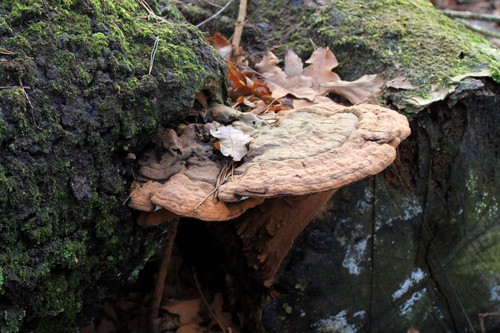
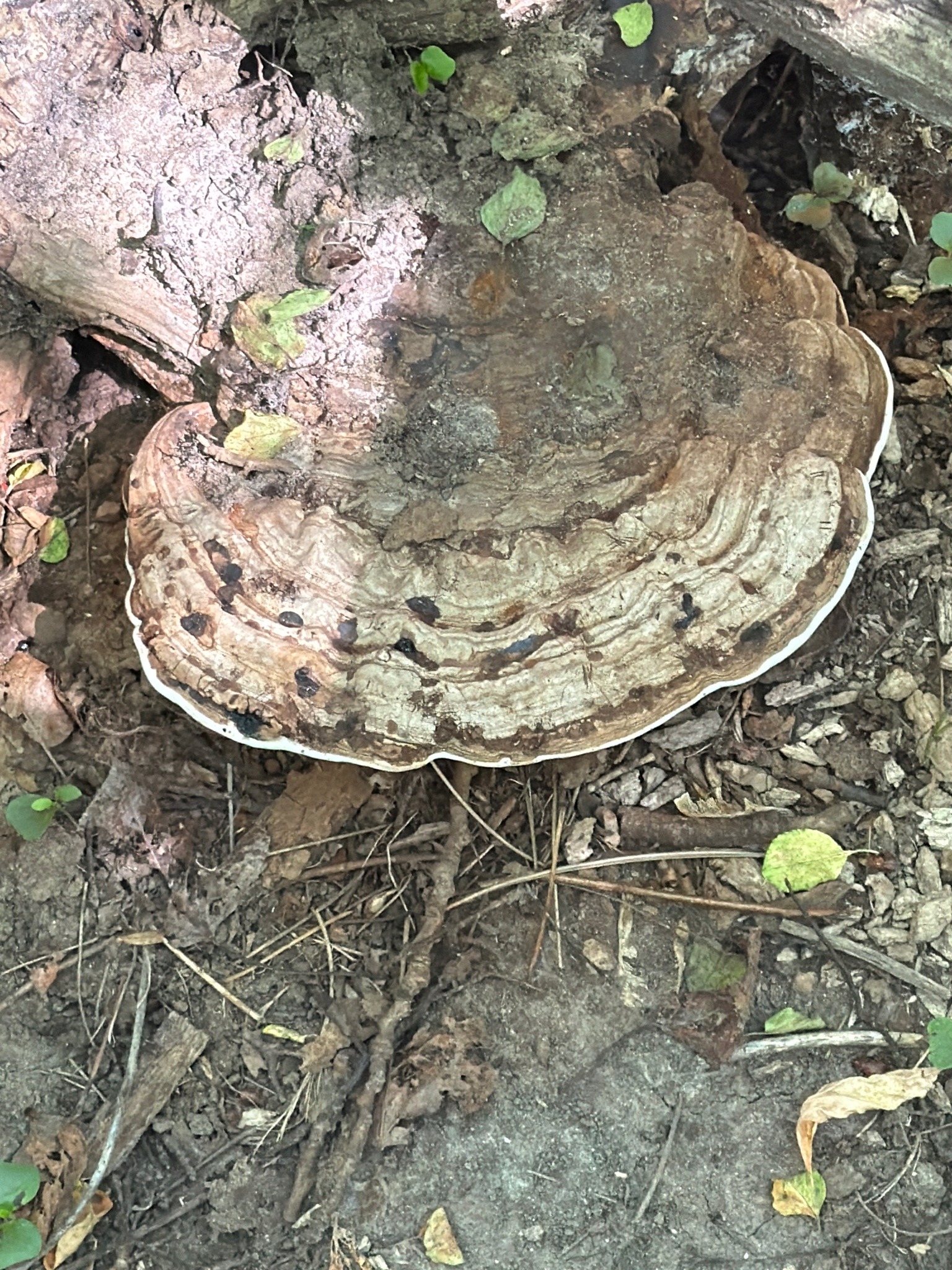
- Large, woody, perennial shelf fungus. Upper surface is grayish-brown, matte, and often covered in a dusting of brown spores. It has concentric ridges and a white growing margin. The underside is white and bruises instantly to dark brown when touched or scratched.
- Fruiting body
- Cap is shelf-like or semicircular, sessile (lacking a stem), 5–50 cm wide and up to 10 cm thick. Surface is lumpy, zoned, and hard. The pore surface on the underside is white when fresh, with 4–6 tiny circular pores per millimeter.
- How to recognise it
- The most diagnostic feature is the white underside that instantly and permanently turns dark brown upon being scratched with a stylus or fingernail.
- Look-alikes
- Ganoderma lobatum (softer, annual growth), Ganoderma lucidum (shiny, varnished-looking cap), Fomes fomentarius (hoof-shaped and harder).
- Ecological role
- Saprophytic (decomposing dead wood) and parasitic (causing white heart rot in living trees). It plays a vital role in nutrient cycling.
- Notes
- This fungus is famously used as a natural canvas by artists; drawings etched into the fresh white pore surface remain permanent as the fungus dries. In nature, it is a significant producer of forest spores, with a single large specimen capable of releasing billions of spores daily during the growing season.