Community find
Artist's Conk
Ganoderma applanatum
- Group
- polypore
- Spore print
- Cocoa brown
- Size
- Cap can range from 10 to 60 cm in diameter and 2 to 10 cm thick; extremely old specimens can reach even larger sizes.
- Season
- Perennial; the fruiting body persists throughout the year and grows larger over several seasons.
- Habitat
- Grows on dead or dying hardwood trees, logs, and stumps; occasionally found on conifers.
- Distribution
- Widespread and common across the Northern Hemisphere, including much of North America, Europe, and Asia.
- Key characteristics
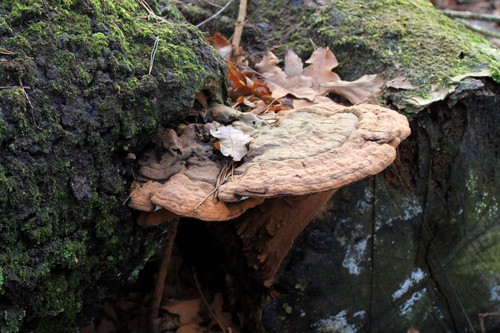
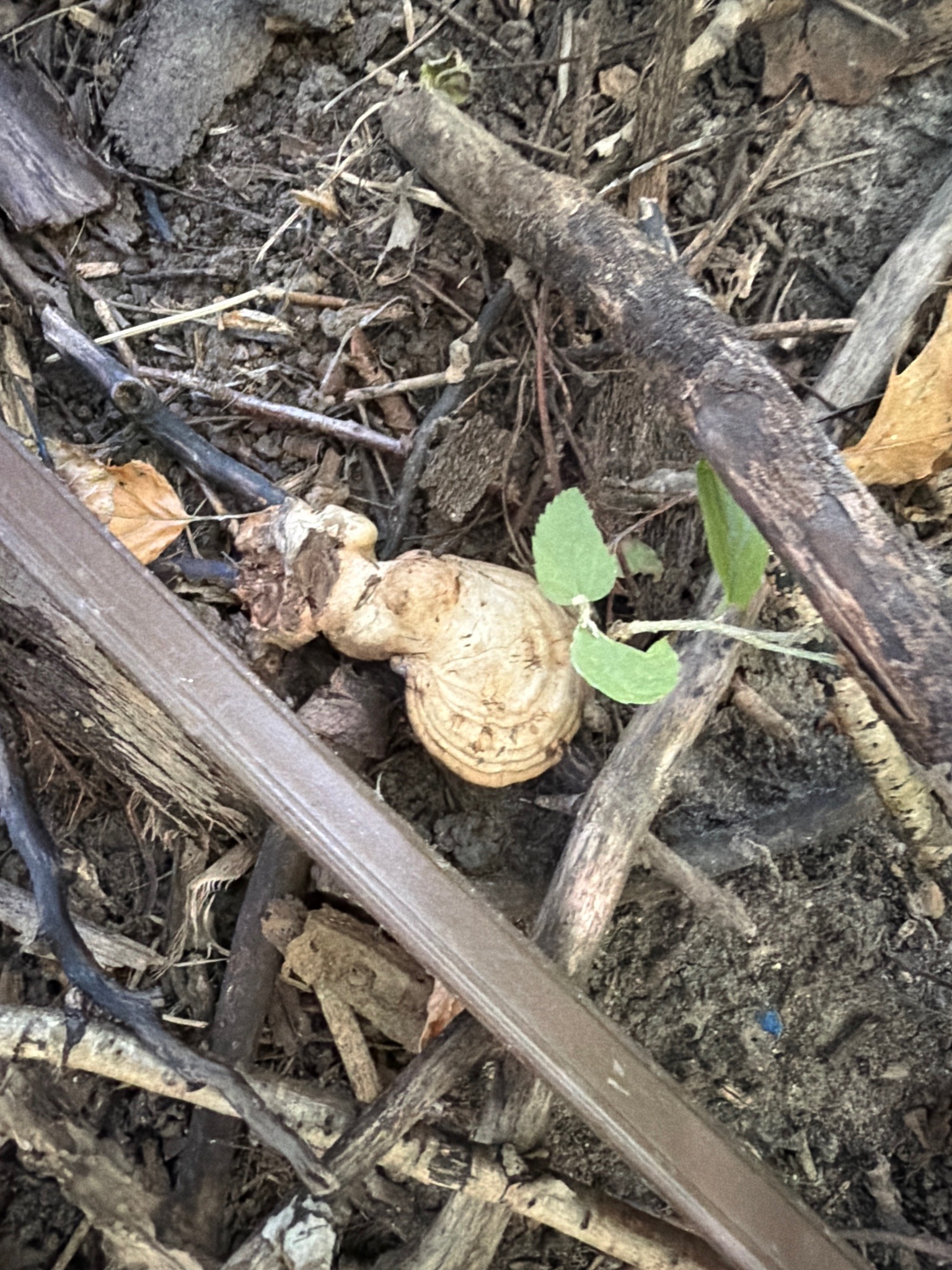
- Perennial, woody bracket fungus with a hard, lumpy, concentric top surface that is often grayish, brownish, or white-dusted. The underside is white with tiny pores and turns dark brown quickly when bruised or scratched.
- Fruiting body
- Cap is fan-shaped or semicircular, sessile (attached directly to host), hard and woody. Surface is dull, greyish to brown with concentric ridges. Hymenophore is poroid, consisting of minute white pores on the underside.
- How to recognise it
- Scratch the white underside with a fingernail or twig; if it immediately turns dark brown and stays that way, it is likely Artist's Conk. The cap is often covered in a fine layer of cocoa-brown spores.
- Look-alikes
- Ganoderma lobatum (often softer and more layered), Fomes fomentarius (typically hoof-shaped and lacks the white pore surface that bruises dark brown).
- Ecological role
- Primarily saprophytic (decomposing dead wood) but can also be parasitic causing white rot in living trees.
- Notes
- The white pore surface is often used as a canvas by artists because it permanently retains lines drawn upon it, leading to its common name. The fungus is perennial and can live for several decades, adding a new tube layer to the pore surface each year.