Community find
Artist's Conk
Ganoderma applanatum
- Group
- polypore
- Season
- Perennial; new growth occurs from spring through fall, but the fruiting bodies can be found year-round as they are long-lived.
- Habitat
- Grows as a saprophyte or weak parasite on dead or living hardwood trees (especially oaks, maples, and beeches) and occasionally on conifers. It causes white rot in the host wood.
- Key characteristics
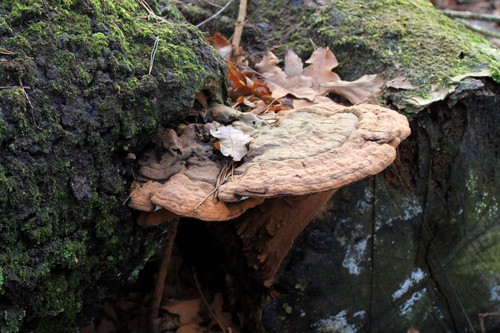
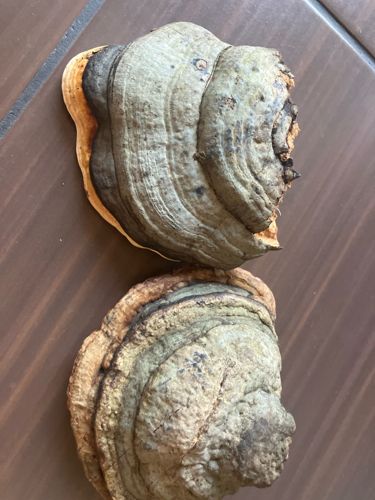
- Large, shelf-like or hoof-shaped fruiting body, typically grayish-brown to dark gray on top with concentric growth zones; the underside is white and bruises brown when handled or scratched, making it popular for 'drawing' on. The flesh is tough and woody.
- Look-alikes
- Other Ganoderma species, such as Ganoderma adspersum or Ganoderma australe, can look similar but may differ in cap color, texture, or pore surface characteristics. Ganoderma lucidum (Reishi) typically has a shiny, lacquered cap. Fomes fomentarius (Tinder Conk) has a harder, often lighter-colored cap and typically a rounder, hoof-like shape.
- Ecological role
- Primarily a decomposer (saprophyte) of dead wood, contributing to nutrient cycling in forest ecosystems. It can also act as a weak parasite on living trees, causing white rot and contributing to their eventual decay. Its persistent fruiting bodies provide habitat for various insects.