Community find
Artists Conk
Ganoderma applanatum
- Group
- Polypore
- Season
- Ganoderma applanatum can be found year-round in many regions, as its fruiting bodies are perennial. However, new growth and spore production are typically most active during warmer, humid months, generally from spring through fall.
- Habitat
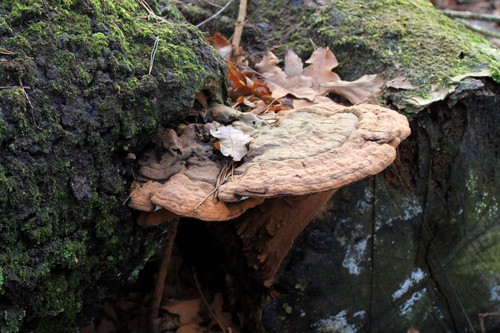
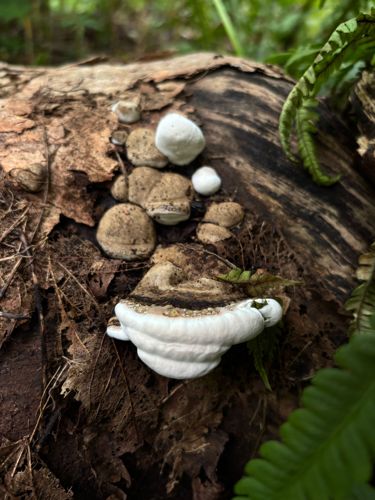
- The fungus is growing on a dead, decaying log or piece of wood in what appears to be a forest or woodland environment. Its presence on a log suggests it is a wood-rotting fungus.
- Key characteristics
- The fungus in the image appears to be a polypore that grows in a bracket or shelf-like fashion. The largest visible fruiting body is shelf-like, with distinct zones. The upper surface is dark, brown, and somewhat bumpy, while the underside and margin are strikingly white and layered or rippled. The smaller, rounder structures scattered on the log likely represent younger or different developmental stages of a similar or related fungus, possibly a Phellinus species, or even the same species in different growth forms. These smaller fungi are generally roundish and tan to light brown, some having a whitish rim.
- Look-alikes
- Similar looking species include other Ganoderma species, such as Ganoderma adspersum or Ganoderma brownii. Ganoderma lucdium (Reishi) has a shinier, lacquered appearance. Other bracket fungi and polypores such as Fomes fomentarius (Tinder Conk) can also appear similar, but Fomes fomentarius typically has a greyish-white to blackish cap and a smoother underside. Distinguishing features for Ganoderma applanatum include its often flattened, shelf-like appearance, brown upper surface, and white pore surface that bruises brown when touched or scratched, giving it its 'artist's conk' name due to its use as a drawing surface. The smaller, roundish fungi in the image might be young Ganoderma applanatum or a different species altogether, such as a species of Phellinus, which are typically woody and resupinate or effused-reflexed.
- Ecological role
- This fungus is likely saprophytic, meaning it obtains nutrients by decomposing dead organic matter, in this case, a fallen log. As a decomposer, it plays a crucial role in nutrient cycling in the forest ecosystem, breaking down complex wood compounds and returning essential nutrients to the soil. Its presence indicates active decomposition processes.