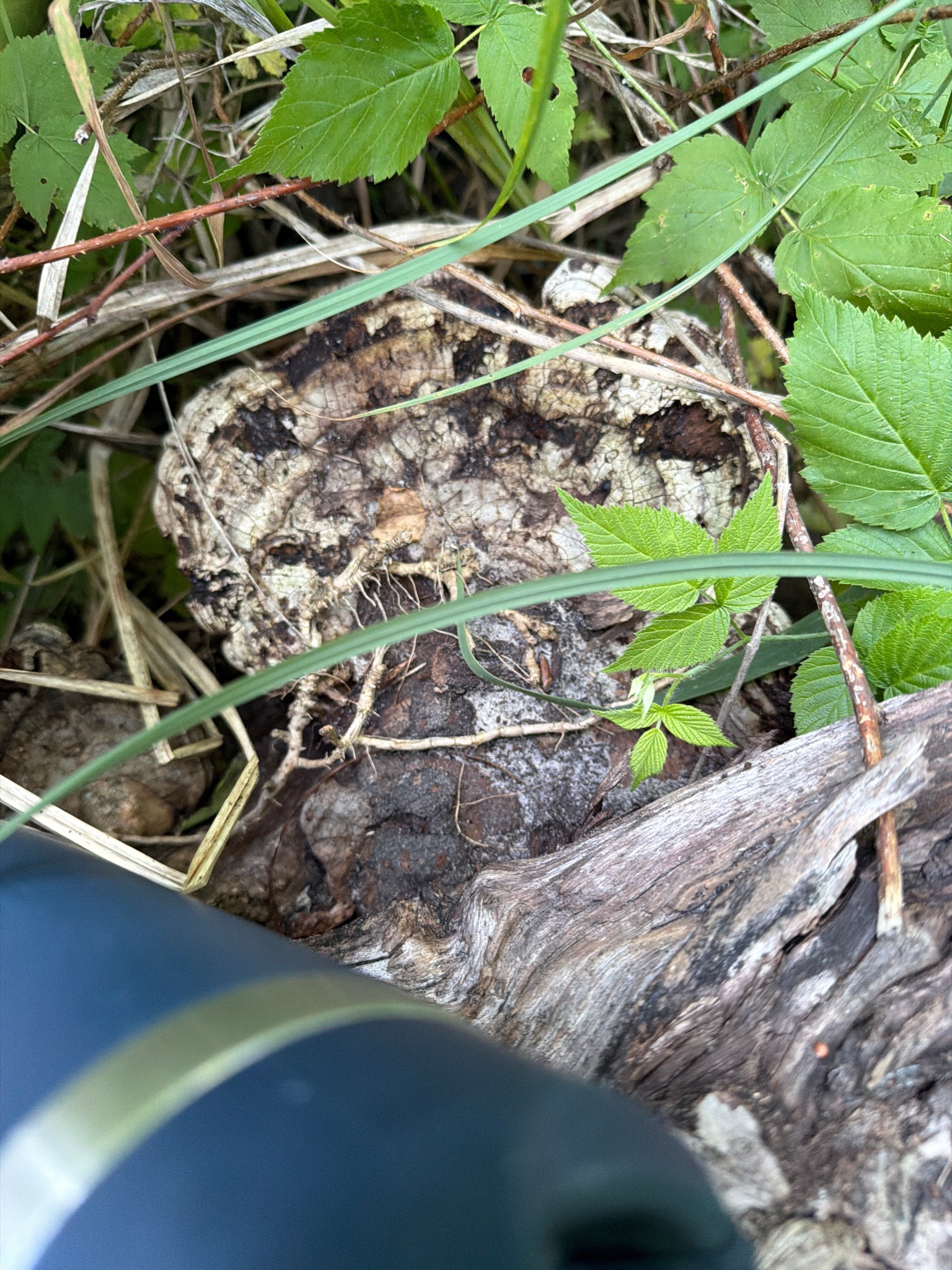
Community find
Birch Polypore
Fomitopsis betulina (formerly Piptoporus betulinus)
- Group
- polypore
- Spore print
- White
- Size
- Cap diameter: 5-20 cm; Thickness: 2-6 cm.
- Season
- Annual but persists through the year; fruiting typically occurs in late summer and autumn.
- Habitat
- Exclusively on birch trees (Betula species), both living and dead; commonly found in birch forests and mixed woodlands.
- Distribution
- Widespread throughout the northern hemisphere where birch trees are present, including North America, Europe, and Asia.
- Key characteristics
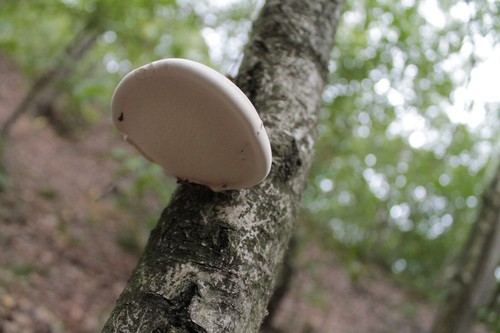
- Kidney-shaped or hoof-shaped fruiting body; smooth, rubbery, brownish-grey upper surface that often cracks and peels; white pore surface underneath; firm, corky texture.
- Fruiting body
- The cap is semi-circular to kidney-shaped, 5-20 cm wide, with a thick, rounded margin. The surface is covered in a thin, papery skin that is grey-brown. The hymenophore consists of small white pores on the underside. It has a very short or absent lateral stipe.
- How to recognise it
- Look for its specific association with birch trees, the smooth, leathery texture of the cap, and the distinct white pore surface that turns brownish with age.
- Look-alikes
- Phellinus igniarius (Willow Bracket) which is darker and more woody, and Fomes fomentarius (Hoof Fungus) which is harder and grey.
- Ecological role
- Parasitic on living birch trees, causing brown rot, and saprophytic on dead birch wood once the tree dies.
- Notes
- A specimen of this fungus was found in the possession of '""tzi the Iceman', a 5,300-year-old mummy found in the Alps. Historically, the dried strips of the corky flesh were used as a razor strop to sharpen blades.