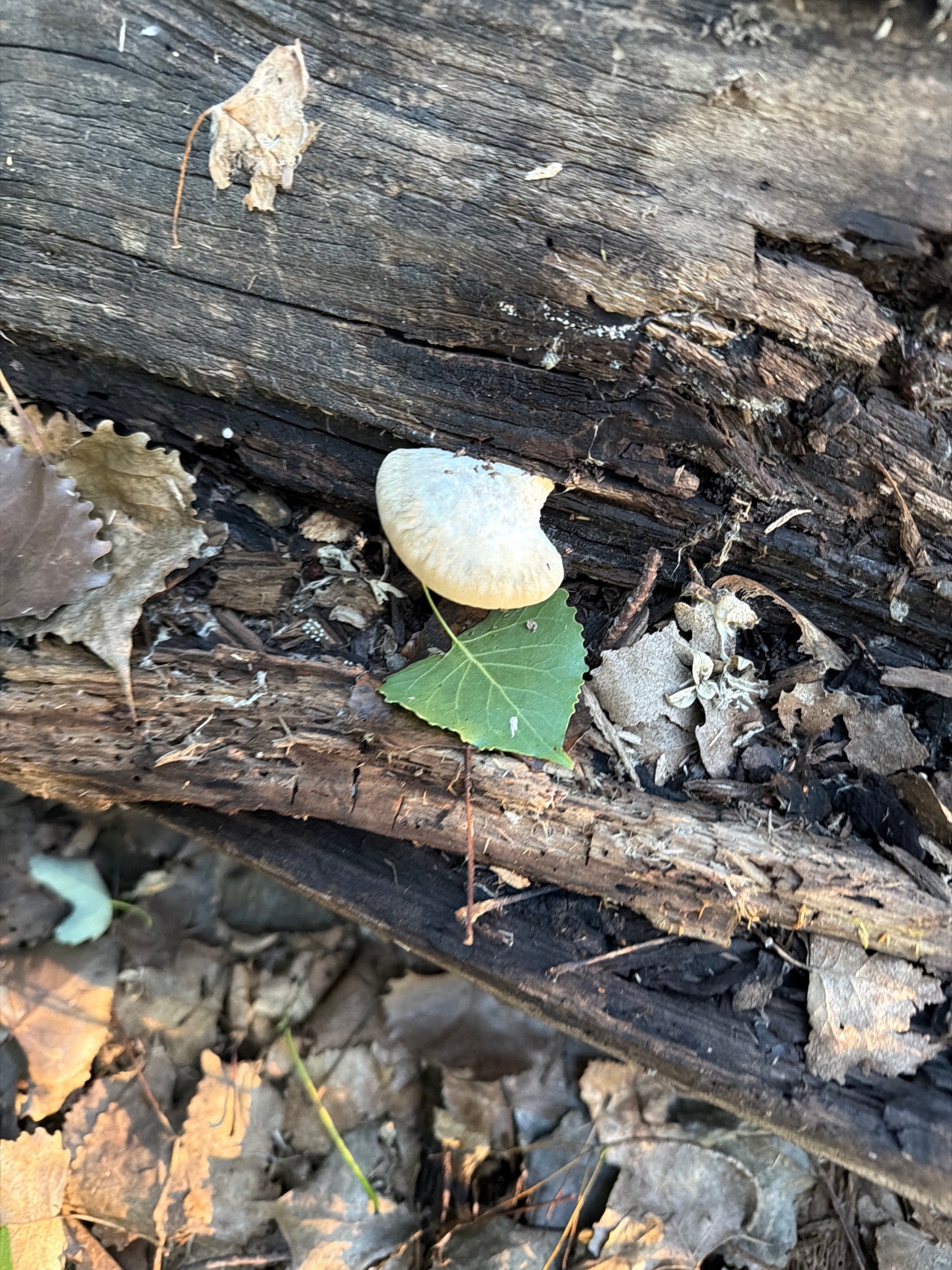
Community find
Birch Polypore
Fomitopsis betulina
- Group
- polypore
- Spore print
- White
- Size
- Cap diameter 5-20 cm, thickness 2-6 cm.
- Season
- Found year-round, but fresh fruiting bodies typically appear in late summer and autumn.
- Habitat
- Exclusively found growing on dead or dying birch trees (Betula species). It is a wood-decay fungus.
- Distribution
- Widespread throughout the Northern Hemisphere wherever birch trees are present (North America, Europe, Asia).
- Key characteristics
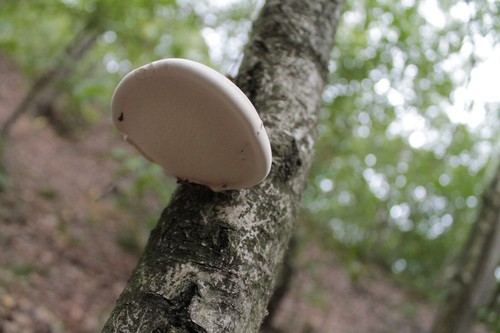
- The fruiting body is shelf-like, smooth, and leathery. It has a pale brownish-white to grey cap with an inward-curving margin that creates a lip around the underside pore surface. The pore surface is white when young, turning brown with age.
- Fruiting body
- Cap is kidney-shaped or semicircular, smooth, with a distinct thick, rounded edge. The underside consists of a dense layer of small pores instead of gills. There is usually no distinct stem, or only a very short, lateral one.
- How to recognise it
- Look for a rubbery, shelf-like fungus specifically on birch wood with a prominent 'lip' or rim around the edge of the pore surface.
- Look-alikes
- Piptoporus quercinus (rare and grows on oak), Fomes fomentarius (tinder fungus, which is harder, hoof-shaped, and darker).
- Ecological role
- Saprophytic (decaying dead birch wood) and weakly parasitic (on living stressed birch trees), causing a brown cubical rot.
- Notes
- This fungus was famously found among the belongings of "Ötzi the Iceman," a 5,300-year-old mummy found in the Alps. Historically, the dried fruiting bodies were used by barbers to sharpen or 'strop' razors, leading to another common name: the Razor Strop Fungus.