Community find
Bitter Bolete
Tylopilus felleus
- Group
- bolete (pored mushroom)
- Spore print
- Pink to vinaceous-brown.
- Size
- Cap diameter: 5-15 cm; Stipe length: 4-10 cm, width: 1-3 cm.
- Season
- Typically fruits from July through October (summer and autumn).
- Habitat
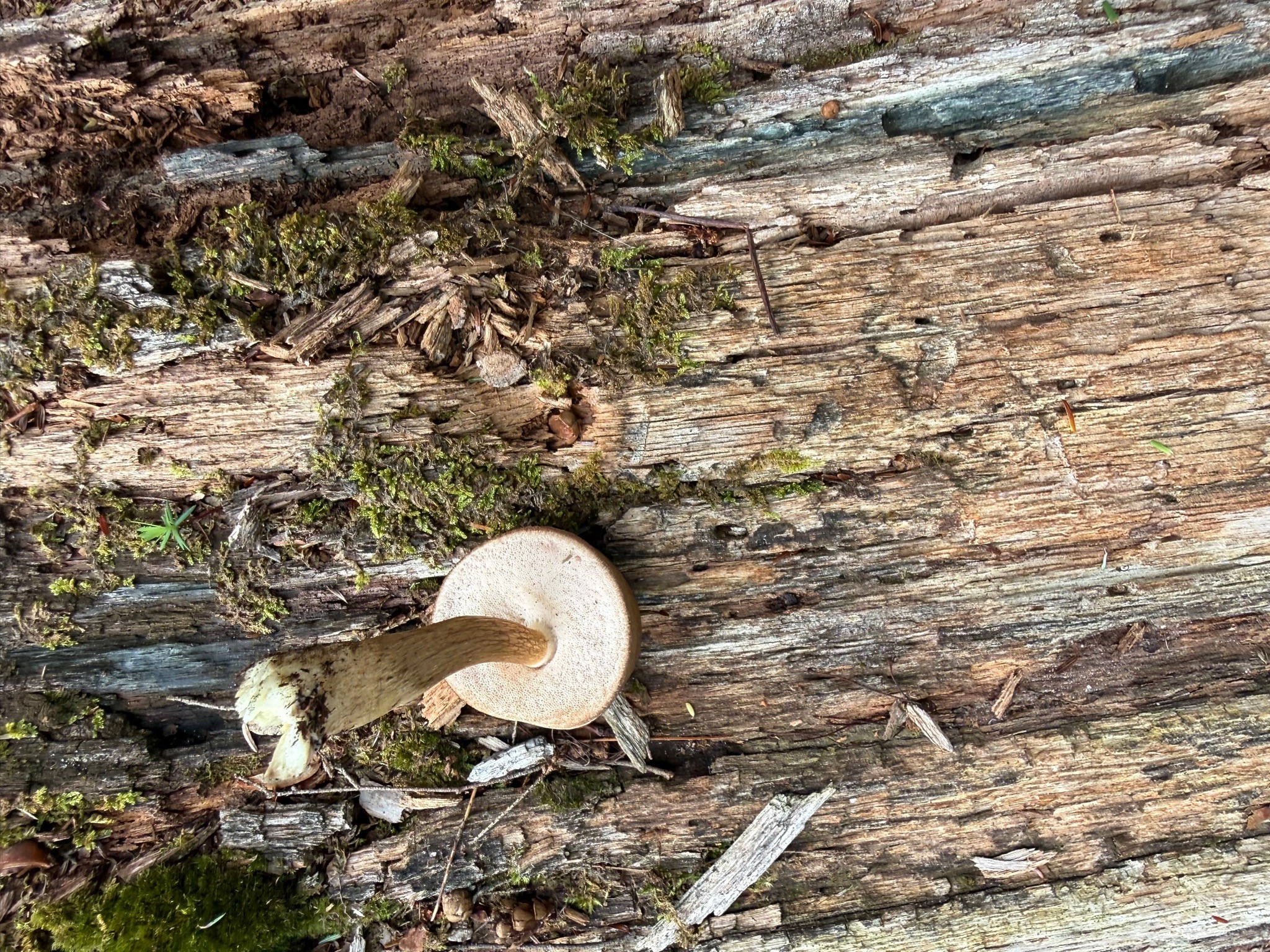
- Found in coniferous or deciduous forests, often associated with hemlock, pine, or oak; grows on the ground or occasionally on well-decayed logs and mossy stumps.
- Distribution
- Common throughout eastern North America and Europe; also reported in parts of Asia.
- Key characteristics
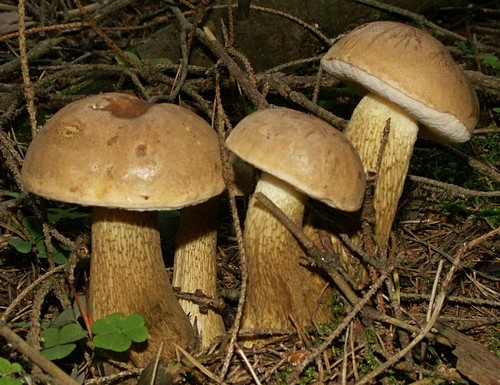
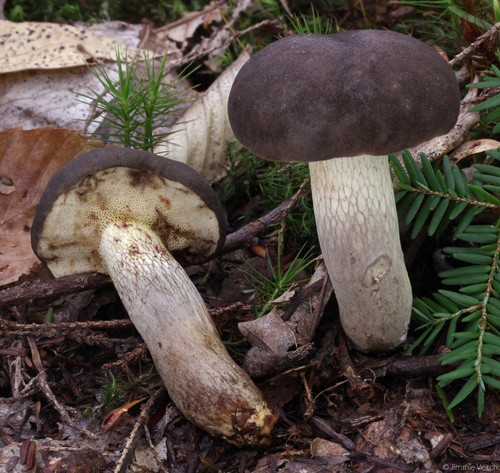
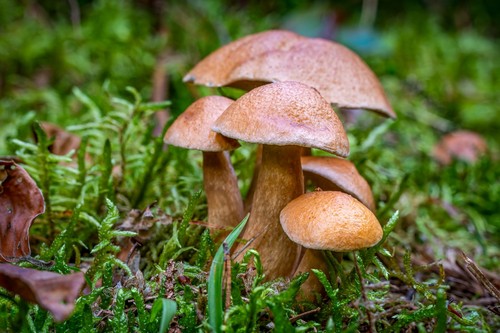
- Convex cap that becomes flatter with age, brown to tan in color with a smooth texture; distinct white pores that turn pinkish-buff or brownish when bruised or with age; a thick, brownish stipe often featuring prominent, dark brown raised reticulation (a net-like pattern).
- Fruiting body
- Cap: 5-15 cm wide, dry, smooth to slightly velvety, brown to tan; Hymenophore: Pores initially white, turning pinkish with maturity; Stipe: 4-10 cm long, 1-3 cm thick, solid, yellowish-brown with prominent dark brown reticulation above.
- How to recognise it
- The most diagnostic features are the pinkish mature pores and the dark, heavy reticulation on the stalk compared to the white/pale reticulation found on many Boletus species.
- Look-alikes
- Boletus edulis (King Bolete) which has white reticulation on the stipe and yellow-green pores; Tylopilus rubrobrunneus which has a more reddish-brown cap.
- Ecological role
- Mycorrhizal, forming symbiotic relationships with various tree species to facilitate nutrient exchange.
- Notes
- This species is famous among mycologists for its extreme bitterness, which is not neutralized by cooking; a single specimen can ruin the flavor of an entire dish if mixed with other mushrooms. It is a common 'look-alike' that serves as a diagnostic test for beginners identifying porcini.