Community find
Chaga
Inonotus obliquus
- Group
- polypore/conk
- Spore print
- White to pale yellow (from the true fruiting body, not the sterile conk).
- Size
- Sclerotium can range from 10 to 40 cm (4-16 inches) in diameter.
- Season
- Visible year-round; harvests typically occur in winter when temperatures are below freezing.
- Habitat
- Found almost exclusively on birch trees (Betula species), occasionally on beech or alder.
- Distribution
- Common in circumboreal regions of the Northern Hemisphere, including Russia, Northern Europe, Canada, and the Northern United States.
- Key characteristics
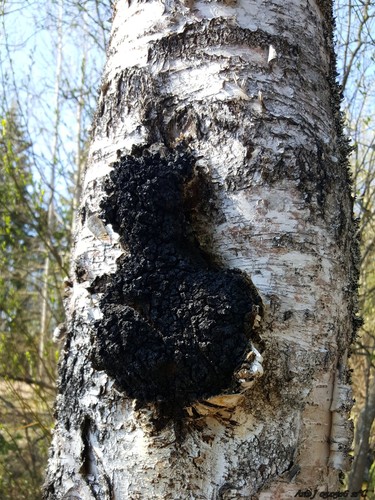
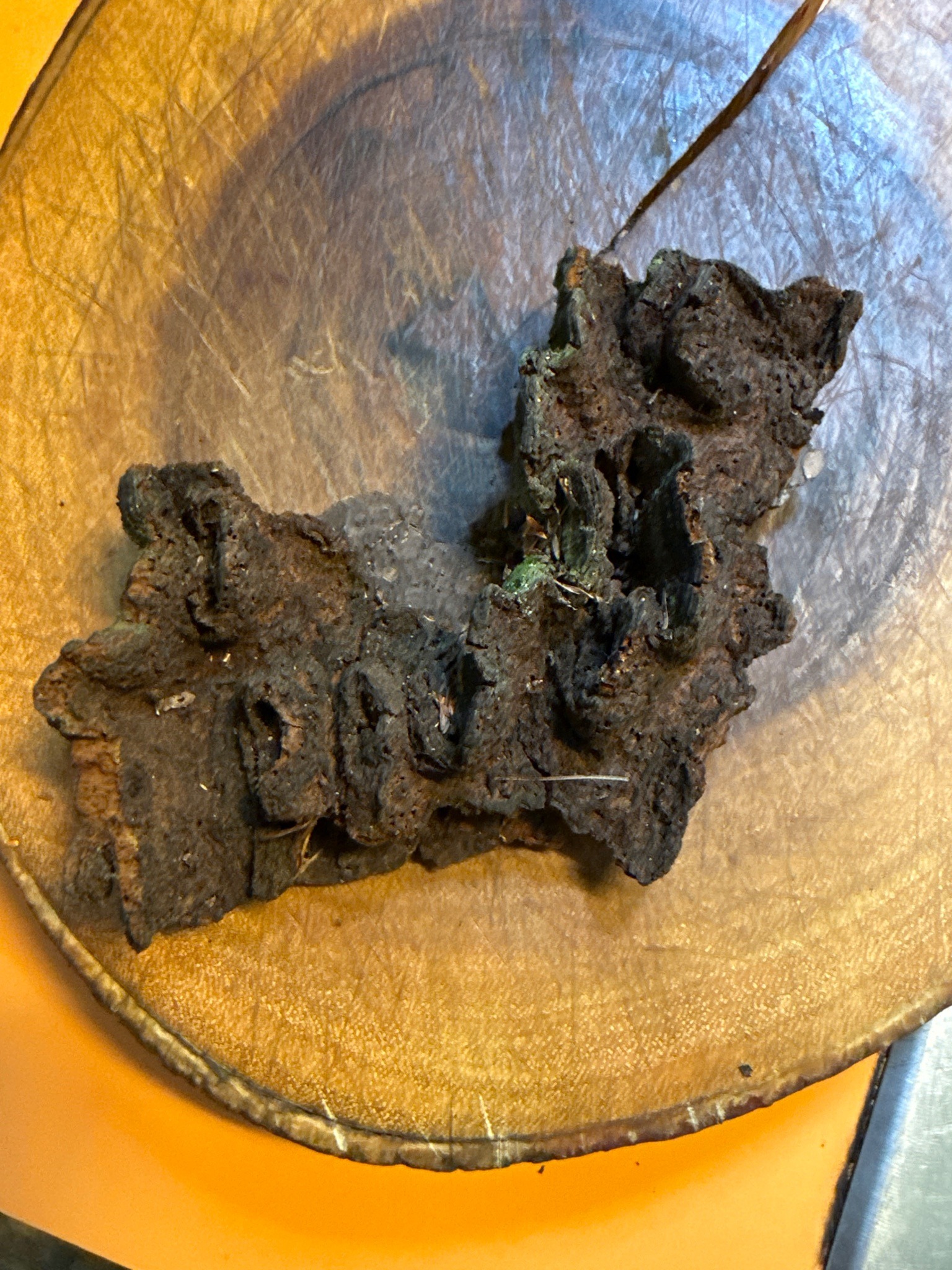
- Sterile conk; rough, cracked, blackish exterior resembling burnt charcoal; golden-brown to orange interior; hard and woody texture.
- Fruiting body
- The visible part is a sterile sclerotium (a mass of mycelium), not a true fruiting body. The true fruiting body is rare and grows under the bark once the tree dies.
- How to recognise it
- Look for a black, charcoal-like protrusion on birch trees with a contrasting bright orange-brown interior when chipped or broken.
- Look-alikes
- Phellinus igniarius (False Tinder Fungus) and certain burls (abnormal wood growth), but both lack the distinct golden-orange crumbly interior of Chaga.
- Ecological role
- Parasitic, eventually causing white heart rot in the host tree, and saprophytic after the tree dies.
- Notes
- The black exterior is due to a high concentration of melanin. Unlike most mushrooms that produce fruit yearly, a single Chaga sterile conk can grow for decades on its host tree.