Community find
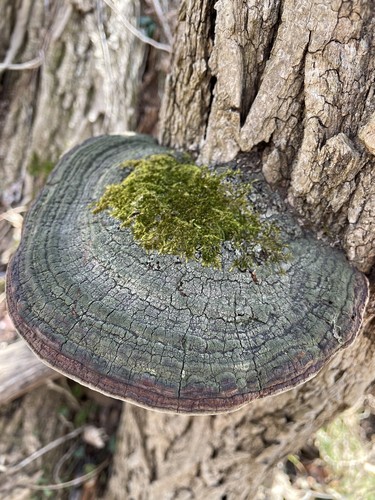
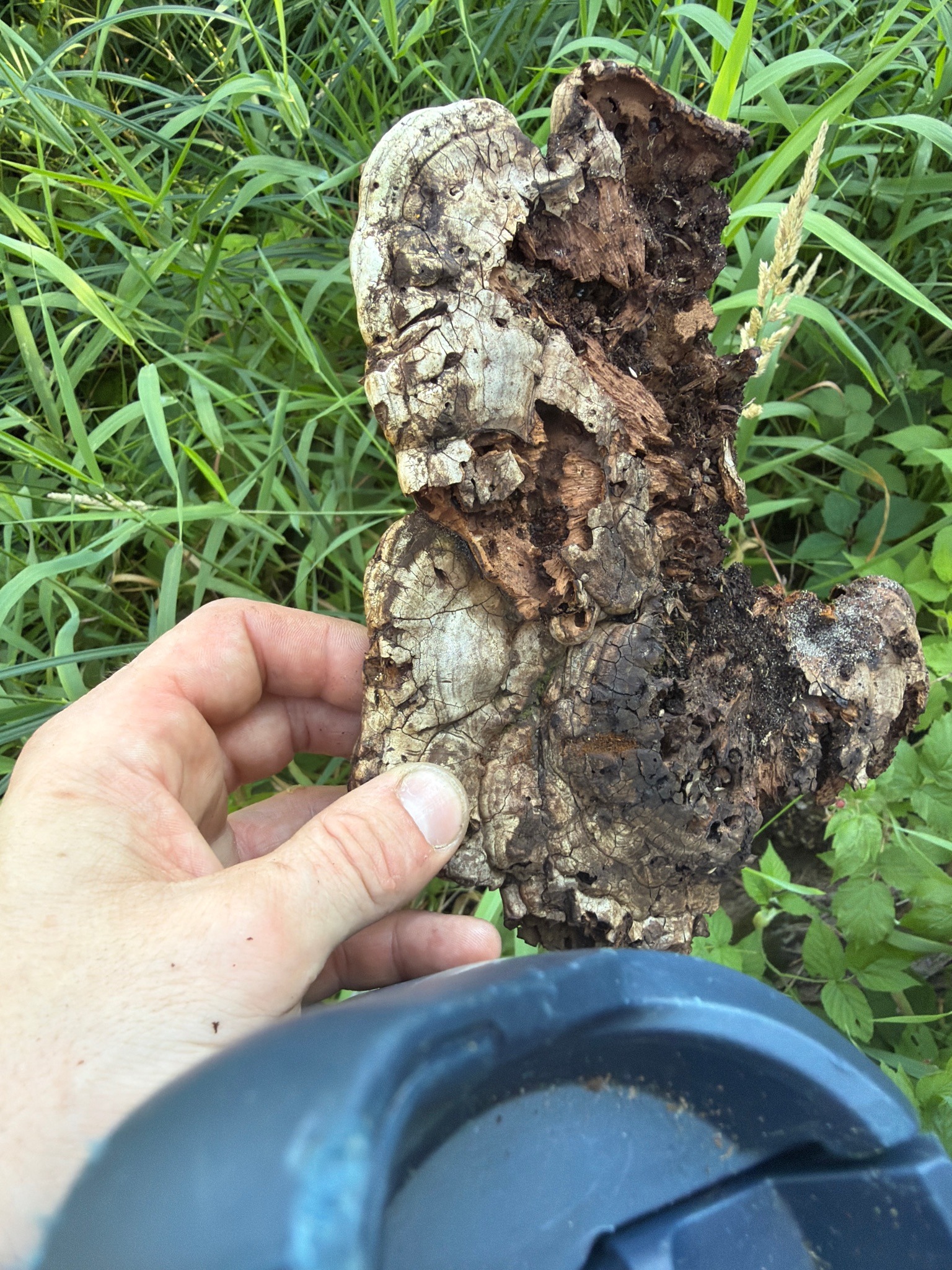
Cracked-cap Polypore
Phellinus robineae
- Group
- polypore
- Spore print
- Reddish-brown
- Size
- Typically 5–25 cm wide and 2–10 cm thick.
- Season
- Visible year-round due to its woody, perennial nature.
- Habitat
- Found exclusively on Black Locust trees (Robinia pseudoacacia) in North America, acting as a heart rot pathogen.
- Distribution
- Common throughout the range of the Black Locust tree, primarily in North America.
- Key characteristics
- Perennial, woody bracket fungus with a dark, deeply cracked upper surface. Roughly hoof-shaped or irregular. The pore surface on the underside is brown.
- Fruiting body
- Hoof-shaped to irregular bracket. The top is grayish-black to charcoal black, becoming deeply furrowed and cracked with age. The interior context is hard and reddish-brown. The underside consists of brownish pores.
- How to recognise it
- Finding a cracked, woody polypore specifically on a Black Locust tree is the primary diagnostic feature.
- Look-alikes
- Phellinus igniarius (grows on birch/others), Fulvifomes species.
- Ecological role
- Parasitic (causing heart rot) and saprophytic on dead Black Locust wood.
- Notes
- The fungus weakens the center of the tree, making it prone to snapping in high winds, yet the tree may survive for many years while hosting the fungus.