Community find
Fairy Ring Marasmius
Marasmius oreades
- Group
- gilled mushroom
- Spore print
- White
- Size
- Cap diameter: 1-5 cm; Stipe: 2-7 cm long and 3-5 mm thick.
- Season
- Typically found from late spring through autumn, often appearing several days after heavy rainfall.
- Habitat
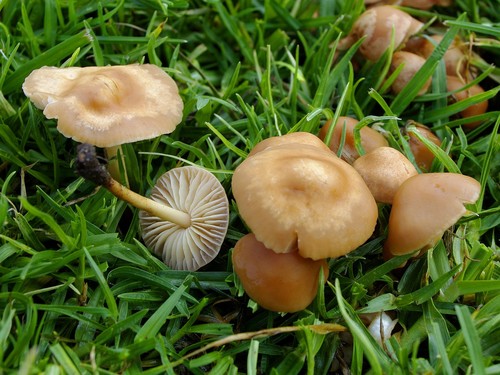
- Grows primarily in grassy areas such as lawns, meadows, pastures, and parks, often forming distinct circles or arcs known as fairy rings.
- Distribution
- Widespread across North America and Europe; found globally in temperate regions.
- Key characteristics
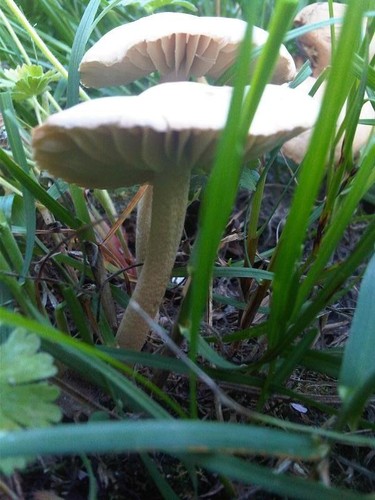
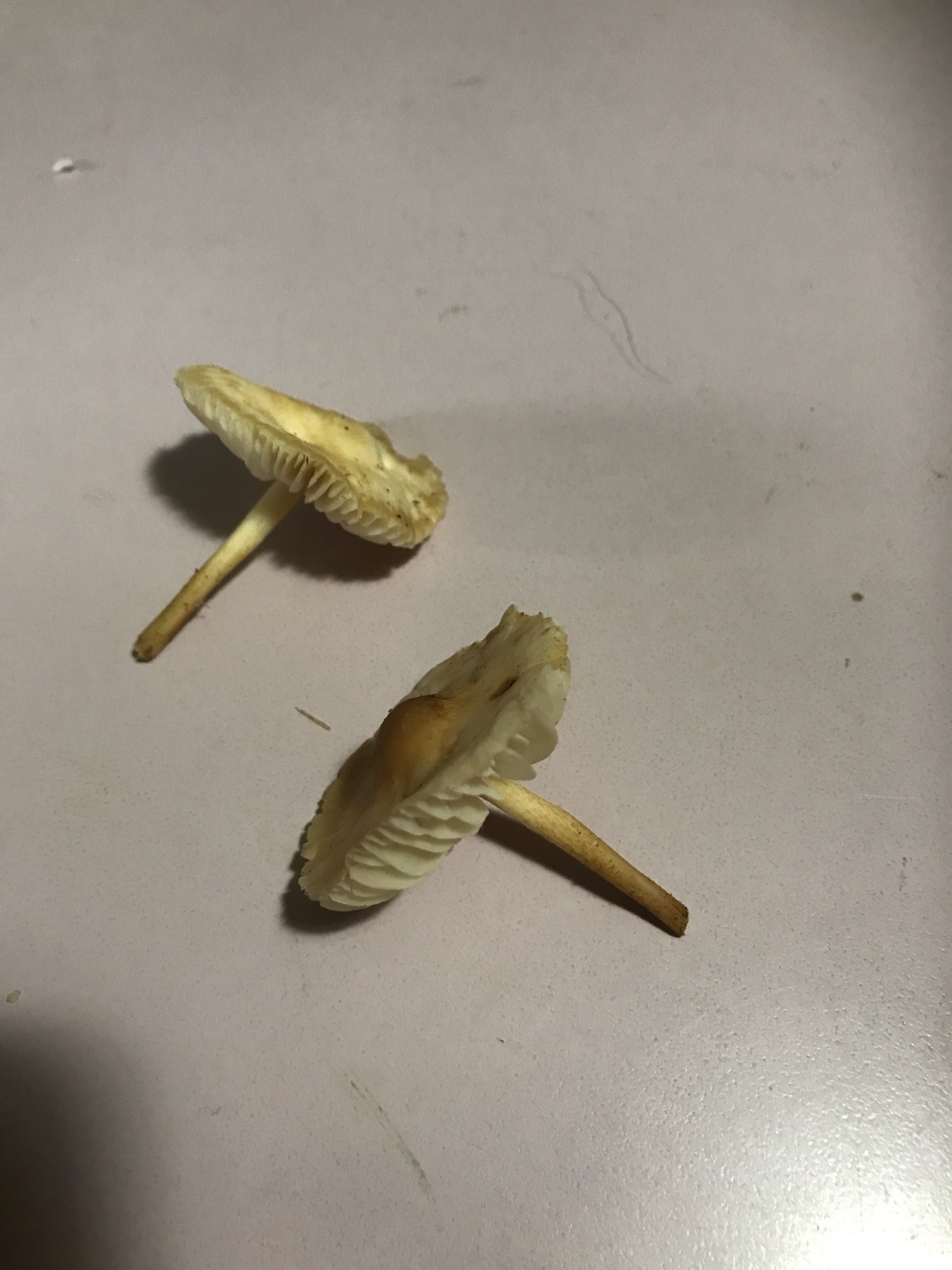
- Convex to flat cap with a central bump (umbo), widely spaced gills that are free from the stem, and a very tough, pliable stem that does not snap easily.
- Fruiting body
- Cap is 1-5 cm across, tan to buff-colored, hygrophanous; Gills are distant, thick, and cream-colored; Stipe is 3-7 cm long, extremely tough and fibrous, colored similarly to or slightly darker than the cap.
- How to recognise it
- The 'twist test' is a key identifier; the stem is so tough it can be twisted several times without snapping. Gills are unusually far apart and do not reach the stem.
- Look-alikes
- Marasmius wynneae (found in woodlands), Clitocybe dealbata (lacks the tough stem and has decurrent gills), and certain Galerina species (which have dark brown spore prints).
- Ecological role
- Saprophytic, breaking down organic matter in the soil and grass thatch.
- Notes
- This species can undergo 'anhydrobiosis,' meaning it can completely dry out in a drought and then revive and continue to drop spores once it rains again. The fairy rings they form are caused by the underground mycelium expanding outward in a circular pattern.