Community find
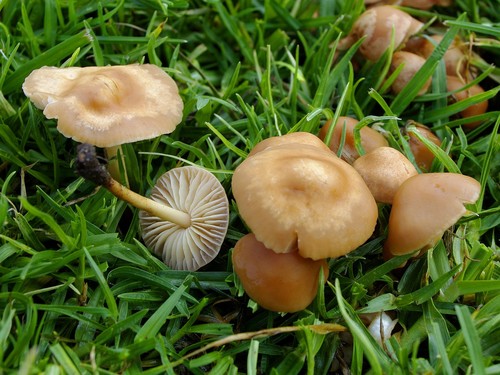
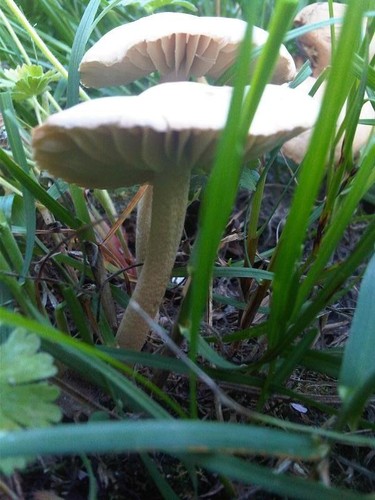
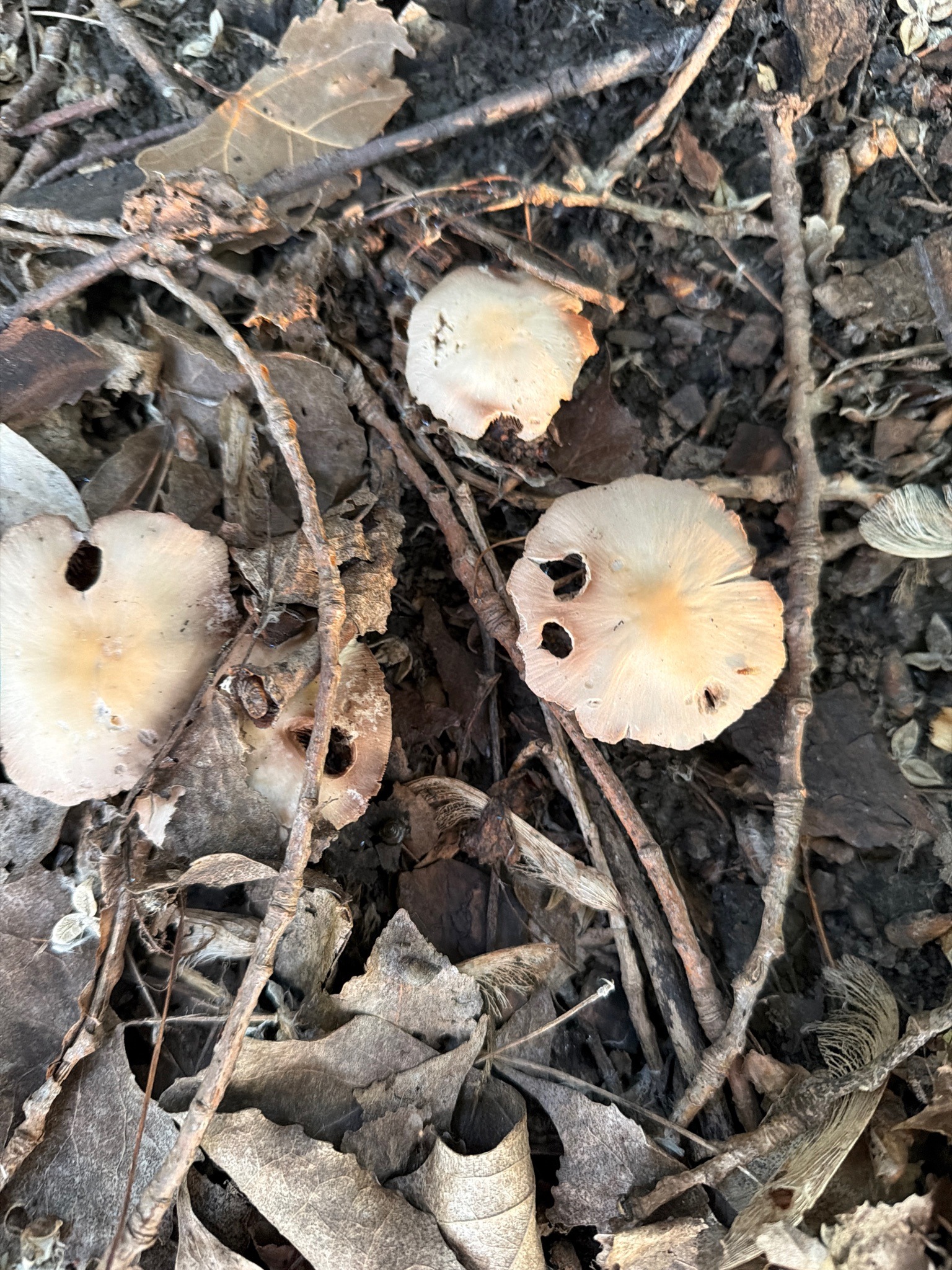
Fairy Ring Marasmius
Marasmius oreades
- Group
- gilled mushroom
- Spore print
- White
- Size
- Cap diameter 2-5 cm; stipe length 3-7 cm, diameter 3-5 mm.
- Season
- Summer to early autumn, often appearing after periods of rain.
- Habitat
- Commonly grows in grassy areas like lawns, meadows, and pastures, but can also be found in leaf litter near wooded edges.
- Distribution
- Widespread across North America and Europe.
- Key characteristics
- Convex to plane cap, often with a slight central bump (umbo); tan to buff color; widely spaced gills that are free or narrowly attached; tough, wiry stem.
- Fruiting body
- Cap is 2-5 cm wide, hygrophanous, fading from tan to cream; gills are distant and thick; stipe is 3-7 cm long, exceptionally tough and fibrous, typically pale buff.
- How to recognise it
- A key feature is the extremely tough, flexible stem that does not snap easily when twisted. The gills are famously 'distant' or widely spaced.
- Look-alikes
- Collybia species (softer stems) and Marasmiellus species. Toxic species like Clitocybe dealbata can also appear similar in grassy habitats.
- Ecological role
- Saprophytic, breaking down organic matter in soil and grass thatch. Known for creating 'fairy rings' in lawns.
- Notes
- This fungus can undergo a process of desiccation and rehydration; it can dry out completely and appear dead, only to revive and continue releasing spores after a rain.